Showing posts with label Ravel. Show all posts

Sunday, January 17, 2016

Playlist

Live

January 12, 2016
Garrick Ohlsson
President's Piano Series - Meany Hall, University of Washington, Seattle

Sonata in A-flat Major, Op. 110 - Beethoven
Mussorgsky
Scherzo in E Major, Op. 54 - Chopin
Etudes in E minor and F-sharp minor, Op. 25 #5 and #6 - Chopin
Nocturne in C minor, Op. 48 #1 - Chopin
Ballade in g minor, Op. 23 - Chopin
Pictures at an Exhibition - Mussorgsksy

Garrick is one of those wonderful pianists who is comfortable enough as himself that he can focus on playing the piece in front of him, without reminding us from moment to moment who you are listening to. He doesn't sway back and forth nor lift his face flyward nor moan in ecstasy (or something). My big takeaways were the cumulating glow of life at the end of the Beethoven, kindled, it would seem, by clarity alone; the Art Tatum-y hit of the Scherzo; the ever-so-delicate tunes of note-clumps in the E minor etude; and the madly disjointed weirdness of Pictures. I rather enjoy the Ravel orchestration, but it's really as a wickedly difficult piano piece that it comes most alive. I made a stab at playing it in high school, and it was heartening to me that even Garrick Ohlsson doesn't always hit the right notes.

Recorded

January 10, 2016
Ma mere l'oye - Ravel - Orchestre de Paris, Jean Martinon

Finding the culturally exotic in the enhanced remembrance of childhood imagination. The episodic structure - set pieces made of set pieces - focuses attention on the color of the instruments rather than on the structure of the tunes they are playing. No sudden moves, solid forms evaporate, glide away, feather precisely.

Maple Leaf Rag - Joplin - Scott Joplin (on piano roll) [from The Smithsonian Collection of Classic Jazz]

It's unfortunate that the dynamics are so flat. Otherwise, the clarity of his playing makes a pretty good case. A distant cousin of Chopin's mazurkas.

Offrandes - Varèse - Ensemble InterContemporain, Pierre Boulez

I was immediately struck by how similar this is to the Ravel in how it functions. This is Ravel with the sharp edges exposed, the shattered exotic, exposed to violence.

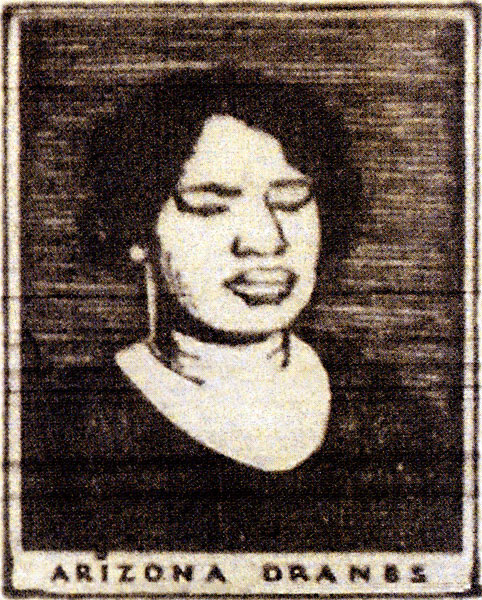
Crucifixion - Arizona Dranes [from Allan Lowe's Really the Blues]

Ragtime blues.

Violin Concerto in D - Stravinsky - Boston Symphony Orchestra, Seiji Ozawa, Itzhak Perlman

Like that Buster Keaton shtick where the scenery keeps changing around him just as he nearly deals with the last disaster.

Three Pieces for Orchestra - Kent Kennan - Eastman Rochester Orchestra, Howard Hanson

Studio trailers for symphonies. Coming Soon to a Theater Near You!

In Session at the Tintinabulary

January 11, 2016
Banned Rehearsal 902 160111 - Karen Eisenbrey, Keith Eisenbrey, Anna K, Steve Kennedy, Aaron Keyt, Neal Kosály-Meyer

Saturday, June 6, 2015

Playlist

Recorded

June 4, 2015
Concerto in G Major - Ravel - Paris National Orchestra, Paul Paray, Monique Haas

Each movement a different take on motoric rhythm. The first starts slap in the middle of what it had been doing for some time (see Stravinsky, below). The second, lovely to die for, a slow waltz slipping awry. Full of tunes that fit fitfully in their ostensible meter.

Quartet #4 - Schoenberg - The Vienna String Quartet

Amazingly alive, melodically, in all its parts. Each moment in each voice unquestionably about something. Each moment an adjective, so thickly woven together that the token subject, the something, is irrecoverable.

Sonatina for Piano - Nancarrow [from Lost Works Last Works]

It occurs to me that two or three sufficiently nimble pianists could pull this off pretty well. Would the loss of its mechanical precision be a mortal blow?

Scherzo a la Russe (symphonic version) - Stravinsky - London Symphony Orchestra, Michael Tilson Thomas

Stravinsky's gambits: The reveals, both sudden and gradual; the veer; the back to business. Lively tunes that wander through the parts of his rhythmic mechanisms. Once it has wound itself up to celebratory heights it stops as though the tape ran out too early.

In Session at the Tintinabulary


May 31, 2015
Duet 150531 - Keith Eisenbrey
An improvisation on 8 pitch (western diatonic tuning, more or less) angklung and steel string acoustic guitar.

June 1, 2015
Gradus 267 - Neal Kosály-Meyer

A tone of complex timbre will divide, branch, bend: become refracted by its passage through time's prism. Careful balance will bring out the stepwise motion of B-natural to C-sharp, with the B arising from the E-natural 19 semi-tones below. The subtle, unplayed, G-sharp 19 semi-tones above the C-sharp fills in a lovely E Major triad with added sixth.

Saturday, April 18, 2015

Playlist

Recorded

April 12, 2015
Requiem - Liszt - Hungarian People's Army Chorus, Janos Ferencsik
trying to look like Horowitz

As severe and restrained a setting as one could wish for, resources reduced to the narrow particularities of men's voices, organ, timpani, and occasional brass. The highest tenor voice is to die for.

alternate movement II from Symphony in C minor - Brahms - Scottish Chamber Orchestra, Charles Mackerras

A bit more expansive in layout than the final version, with some variant contrapuntal details.

4 Ogives - Satie - Frank Glazer

These little piano pieces are not far removed, spiritually, from Liszt's Requiem, or perhaps more to the point, his Tenebrae, but with a conceptual wrinkle: They are each essentially identical to their fellows. The differences in detail between them are exactly and only those differences that make no difference.

Lieder und Gesänge - Mahler - (performers not known)

My indexing fell apart here. I think I dubbed this to cassette tape from a friend's CD - probably in the 90's sometime, but neglected to collect any information about the singer (female) and pianist. It may have been paired with Lieder eines fahrended Gesellen. I tried to figure out who it is by perusing discographies on line, but to no certain avail.

April 14, 2015
The Golden Spinning Wheel - Dvorak - London Symphony Orchestra, Istvan Kertesz

This piece is up near the top of list of favorite Dvorak pieces. Among other strengths it is easily the best animated Disney movie ever, like Snow White but with the pacing of Eisenstein.

Jeux d'eau - Ravel - Vlado Perlemuter
The Unanswered Question - Ives - New York Philharmonic - Leonard Bernstein

I'll take these two as a pair. They share an absolute dependence for their power on their names, or rather on the relation between their names and their affects. Each is as literal as the other. I began to think that an excellent rule-of-thumb for what classical music (in the marketing sense) is, is just that music in which the name of the piece has an essential relation to how we perceive the piece.

In Session at the Tintinabulary

April 12, 2015
Duet 150412 - Keith Eisenbrey

Slide whistle and acoustic steel-string guitar. I added some barn-silo reverb to the final in order to mitigate some unfortunate wind noise on the slide-whistle track.

April 13, 2015
Banned Telepath 32 150413 Seattle
Banned Telepath 32 150413 Somerville
Banned Rehearsal 883 150413 - Karen Eisenbrey, Keith Eisenbrey, Steve Kennedy, Neal Kosály-Meyer (in Seattle); Aaron Keyt (in Somerville)

Saturday, September 27, 2014

Playlist

Recorded
 
September 24, 2014
Central Park In The Dark - Ives - New York Philharmonic, Leonard Bernstein
 
Such tunes as there are appear like ghastly voices, disembodied, unaffecting their surrounds.
 
Daphnis et Chloe - Ravel - Orchestre de Paris, Jean Martinon
 
Even the shadows are resplendent and glow. Violence is vanquished by balance, mathematics, proportion. Harmony is defused. Drama relies on accelerating crescendi and textural pullbacks.
 
Our Planet
September 25, 2014
The Planets - Holst - New York Philharmonic, Leonard Bernstein
 
An attempt to understand horror by placing it within a system, a character within a pantheon, one among the several aspects of the Man.
 
Frankie and Johnny - Al Bernard
 
An arch performance of a quintessential American song - simultaneously rooted in particulars and expansively mythic.
 
Lyric Suite - Berg - Galimir String Quartet
 
Here the 12-tone method is a means of control over a hyper-varied landscape. The method is a focus, but it isn't the object of focus.
 
In Session at the Tintinabulary
 
September 21, 2014
Holmes Harbor 140921 - Keith Eisenbrey
 
Recorded at dawn September 21, 2014, at the south end of Holmes Harbor, on Whidbey Island. Some traffic in the distance, but also gulls, ducks, and the quiet tickery noise a damp barnacly beach makes at dawn.
 
Fryingpan Glacier from Second Burroughs, Mt. Rainier National Park
September 22, 2014
Second Burroughs 140922 - Keith Eisenbrey
 
Between the wind noise that even a wool sock wrapped around the Zoom couldn't keep out is the sound of water gushing out from under the Fryingpan Glacier several miles away.
 
First Burroughs Trail 140922 - Keith Eisenbrey
 
Likewise, but the somewhat louder sound of the White River deep in the gulf below.
 
Gradus 252 - Neal Kosály-Meyer
 
Of prime compositional concern is the nature of change that the fact of being subsequent inflicts upon the present.

Sunday, April 20, 2014

Playlist

Live

April 12, 2014
A Cat's Life
A piano Recital by Keith Eisenbrey, with special guest Olivia Sterne
Chapel Performance Space, Good Shepherd Center, Seattle
 
Attitude (Two soloists punch their way out of a paper bag) - Doug Palmer
Greek Nickel #2 - J. K. Randall
Sonata - Aaron Keyt
A Cat's Life, a little opera for solo piano - Keith Eisenbrey
 
Herocat revisits the scene of the crime
After I was done and we were putting things away a resident cat came to inspect the piano.
 
Here are the program notes:
 
In spite of his unfailing attempts at self-deprecation, composer, instrument maker, and partially reformed auto mechanic Doug Palmer has emerged as a unique and valued voice in the Seattle new music community. Attitude began it's life as a duet for cello and piano, but when a cellist was not forthcoming I asked if he could rework the piece for solo piano. Its subtitle: two soloists punch their way out of a paper bag, is pretty much all the program notes you will need.
**
J. K. Randall has been such a powerful presence in American musical life for so long that it is difficult to overestimate his influence. He is among the first pioneers of computer-synthesized music. He taught many generations of composers and theoreticians at Princeton until his retirement in 1991. He is an inimitable writer, editor, theorist, and critic. Over the course of his long life he has collaborated with dozens of musicians, but his decades-long on-going conversation with Benjamin Boretz, in words spoken and printed as well as in music improvised and composed, stands as one of the most fruitful intellectual duets of our time. Typically, Greek Nickel #2 does not invite so much as demand engagement. The surface is spare and nearly void of rhetorical clues. What kind of a thing is it? I've been working on it for a year or more and I'm still not sure. We'll have to dive down pretty far, I think, so take a deep breath.
**
Aaron Keyt is a local composer. He studied composition at the UW and Princeton. He has composed for orchestra, chamber groups, and piano, as well as working with computer-generated and -modified materials. Along with Keith Eisenbrey and Neal Meyer, he is a founding member of the improvisational group Banned Rehearsal, now in its 30th year. Sonata (2012) is a hard-edged, unapologetic, neo-classical foray, modeled from movement to movement - with various schemes - on Haydn's Sonata in E, Hob.XVI:31. The most interesting aspect that shines through as a property of both is the peculiarity with which one phrase moves to the next - never exactly graceful or lyrical: more spidery, subtle, insurrectionary.
**
In writing A Cat's Life, I wanted to tell a story in music, using every time-honored rhetorical trick I could think of: long and short range key relationships, motivic recurrence and transformation, and of course words spoken out loud. Starting with the name of a friend's kitten (Heldenkitty), tale and music developed together: a fable of Herocat's life and death, his dreams and doubts, and even his great task (a double fugue, no less). Is it an opera? I think so, though perhaps only as a literary conceit. But what is opera after all, if not a literary conceit?
April 18, 2014
Kleine
Hoax Foot
Lion Pincher
Pouch
Victory Lounge, Seattle
 
 A quartet of two-piece bands, HF and LP (hmm) share a drummer, LP and P share a guitarist.Squint a little and the line-up reads like the name of a law firm. K made a valiant attempt to conjure up a working jet engine by starting with the roar. HF dialed it back (a little). LP and P didn't so much dial it back up (though that too) as finesse the design.
 
Sociologically, these bands are essentially playing for their friends - a good many of whom are in other bands. To some extent the differences among them (especially notable in this line-up) have more to do with the particulars of the way each duo interacts with each other than with musical differences per se. K could be the cousins from Boise, the others a subset of the local poly-amorous sub-commercial rock scene, all getting together for a jamboree. There is apparently another music venue next door to VL, so there is also a steady stream of slightly differently costumed folks wandering in to use the ATM. A certain gymnastic ability is required if you want to squeeze past the band to get to the porch, which gets trickier the more you've had.

Recorded

April 13, 2014
Polonaise in A-flat (1821) - Chopin - Peter Katin
 
If the date is to be believed, he would have been 11 or 12 when he wrote this. Already the paradigm is vocal, the left hand discreetly chunking along while the right hand sings.
 
Concerto in B minor, op. 7 - Paganini - London Philharmonic Orchestra, Charles Dutoit, Salvatore Accardo
 
A coloratura with superpowers. Paganini was one of the many composers who, envious of the attention and social power divas were drawing from audiences, absconded with the toolkit.
 
Papillons - Schumann - Peter Frankl
 
A set of waltz fragments that shifts gears so many times and turns so many corners it makes your head spin. It really shouldn't work at all, as a piece, but it does. There is a deep melody there whose notes are made from the angles between each phrase, each figure. Meta with capital M.
 
Remeniscences de Lucia di Lammermoor - Liszt - Alfred Brendel
 
Following in Paganini's footsteps to some extent, but Liszt didn't want to be just the singer, he wanted to be the whole opera, and not only to be that, but to be transfigured as well.
 
Overture from Der Fleigende Hollander - Wagner - Seattle Symphony Orchestra, Gerard Schwarz
 
Premeniscences.

April 14, 2014
La Damnation de Faust - Berlioz - London Symphony Orchestra, Colin Davis
 
First of all a complaint: Is that the conductor I hear moaning along with music? Sheesh.
 
As flabbergasting as Papillons, but on a massive scale. The individual numbers are set on inclines. New elements sneak in under cover, or from behind, or plop down, dis-ceremonious, into our laps. There are long stretches of terrifying immobility - no dance or counterpoint or long line to lead us here or there, just a fragmented bit of music . . . then another . . . then another . . . then another.  Catastrophe might lurk in a single pianissimo note lingering ever so slightly too long, or a root position triad in not quite the right place. Not an easy listen, but hard to stop thinking about.

April 15, 2014
Scherzo in E-flat minor, op. 4 - Brahms - Julius Katchen
Offertorium 'Afferentur regi' - Bruckner - Chor des Bayerischen Rundfunks, Eugen Jochum
Overture on Russian Themes - Rimsky-Korsakov - Bochum Symphony, Othmar Maga
 
Another complaint, this time about the production: Every instrument is in your face and dynamic contrast is messily lost. I suppose this would help it to sound better on a bad radio, but I doubt R-K would approve.
 
Quartet in D Major - Tchaikovsky - Copenhagen String Quartet
 
The music is held in a tight grip. Individual straying is sternly tolerated and must return to the grip.

April 17 2014
Quartet in D Major - Borodin - Borodin Quartet
 
Imperial comfort music. Nothing gets in the way of the tune. Each function knows its place. Even when it's in canon with itself the moving parts carefully trade the spotlight. I must admit though, they're pretty great tunes.
 
Sonata in A Major -  Franck - Jascha Heifetz, Artur Rubinstein
Mt. Hood and Mt. Saint Helens, from the Wonderland Trail,
Mount Rainier National Park - August 1976
 
Lines of hills interfolded into the distance.
 
Zwei Lieder - Mahler - [unlabeled]
Allegro Concert in B-flat minor op. 18 - Scriabin - Michael Ponti
 
Uncontainable.
 
You've Been a Good Old Wagon (But You Done Broke Down) - Len Spencer  [from Allen Lowe's That Devilin' Tune]
St. Louis Rag - Pryor's Band  [from Allen Lowe's That Devilin' Tune]
Valses nobles et sentimentales - Ravel - Vlado Perlemuter
 
It never occurred to me just how Schumannesque this is. A set of fancy waltzes like Papillons, but also a study in contrasting personalities. Ravel might have just as appropriately called it Eusebius et Florestan. A fancy clock with ports that open to views of its clockwork, and ports in its clockwork that open to views of itself at its clock work.
 
In Session at the Tintinabulary

April 13, 2014
Zuckerman 140413 - Keith Eisenbrey
 
Clavichord improvisation. Pretty happy with the sound.

Upcoming

May 2, 2014
Seattle Composers Salon
Chapel Performance Space, Good Shepherd Center, Seattle 8pm

I will be performing selections from my work in progress Études d'exécution imminente.

June 27, 2014 - 8 PM
Banned Rehearsal Celebrates 30 Years of Noise
Chapel Performance Space, Good Shepherd Center, Seattle

Saturday, March 29, 2014

Playlist

Recorded
 
March 23, 2014
Symphony in E-flat - Edward Elgar - Giuseppe Sinopoli
 
triumphal moment follows
elegant threads to cottage doors
from victory in a bright clime
 
(but now we're at this elegant ball!)
 
reservoirs of stolid resolve.
alternatives activate deflection,
potentiates hyperextension
 
(and that is why we safely sleep.)
 
Renard The Fox - Stravinsky - Orchestre de L'Opera National De Paris, James Conlon
 
A tight rein on the affect - a quicktime staccato - allows an extraordinary precision of meter and timbre. The more bare-bones styles of rock and roll work this same trick on occasion.
 
March 24, 2014
Carl Ruggles
Angels (for 6 trumpets) - Carl Ruggles - Studio Brass Ensemble
 
A former eternity, staring.
 
March 25, 2014
Lyric Suite - Alban Berg - LaSalle Quartet
 
Our footing is insecure. We can use contour similarity as an earguide, but sequential figures tend to reconfigure themselves en route. In the absolute middle of the piece it drifts away and that's it.
 
Concerto in D - Maurice Ravel - Paris National Orchestra, Paul Paray, Monique Haas
 
Episodes in an arrival, from beyond a hill, of something huge.
 
Jeu de Cartes - Stravinsky - London Symphony Orchestra - Colin Davis
 
At it's best when it becomes so self-involved it forgets to please.
 
March 27, 2014
Sinfonietta  - Walter Piston - New York Chamber Symphony of the 92nd Street Y, Gerard Schwarz
 
Always on firm thematic ground, it moves like a snake in seamless glides, and always keeps its head down. The middle movement crawls inside.
Kid Ory
 
1919 Rag - Kid Ory [from Allen Lowe's That Devilin' Tune]
 
Fabulous, but old-fashioned. The song structure is clearly audible inside the hoopla.
 
Formel - Karlheinz Stockhausen - Sinfonie-Orchester des Sudwestfunks, Karlheinz Stockhausen
 
Deeply concerned with its own rhetoric, with how it explicates itself. The strongest sense in which it is a piece comes from its single-minded approach to tipping its own hand.
 
Need Your Love So Bad - Little Willie John [collected from Dave Marsh's The Heart of Rock & Soul]
 
guitarist to die for.

Ram-Bunk-Shush - The Ventures [from Walk Don't Run]
Cecil Taylor
Enter Evening - Cecil Taylor [from The Smithsonian Collection of Classic Jazz]
 
Simultaneously articulate on multiple planes.

Slipped, Tripped and Fell In Love - Ann Peebles [from Original Funk Soul Sister The Best of Ann Peebles]
 
The title could be a romantic comedy, but the song itself is deliciously bitter.
 
In Session at the Tintinabulary
 
March 23, 2014
Crestline 140323 - Keith Eisenbrey
 
(tenor banjo)
 
March 24, 2014
Banned Rehearsal 855 - Karen Eisenbrey, Keith Eisenbrey, Steve Kennedy, Aaron Keyt, Neal Kosály-Meyer
 
Upcoming
 
April 12, 2014 - 8 PM 
A Cat's Life Returns Again - a recital by Keith Eisenbrey, piano, with special guest Olivia Sterne, narrator
Chapel Performance Space, Good Shepherd Center, Seattle
Attitude - Doug Palmer
Greek Nickel 2 - J. K. Randall
Sonata (2012) - Aaron Keyt
A Cat's Life, a little opera for solo piano (1990) - Keith Eisenbrey
 
June 27, 2014 - 8 PM
Banned Rehearsal Celebrates 30 Years of Noise
Chapel Performance Space, Good Shepherd Center, Seattle