Recorded
September 9, 2018
Zeitmasze - Karlheinz Stockhausen - London Sinfonietta
not yet
if it ever will be
divested of its operatic flow
a scene of sniping-at-each-other people
irreproachable by design
staining the whole is its forcefully presented Modernity, its Avante Gardity
the purpose of this music is to set the front point of the fashion of music
to get ahead of us'n'all
Try A Little Tenderness - Otis Redding [collected from Dave Marsh's The Heart of Rock & Soul]
magnificent right up to where it gets big and self-absorbed for no particular payoff beyond a merciful fade-out
Younger Than Springtime - Oscar Peterson Trio [from Great Connection]
flits
easily
from texture
to texture
touch
to touch
September 13, 2018
A Pedantic Soliloquy - Keith Eisenbrey, Neal Kosály-Meyer [November 1981]
just post under graduate thinking processing as sonic or aural essay
left
the text
right
the sighs
passed
traded
clap!
chains by x-junctions
bare channel LR composition personhood
bangclankclapwhap reminiscifying a chamber Trans a la Stockhausen
weary feet
we break into anthem
music theory in its performance practice
Live
September 10, 2018
Banned Rehearsal 966 - Karen Eisenbrey, Keith Eisenbrey, Steve Kennedy, Aaron Keyt, Neal Kosály-Meyer
An inquiry into music, through those particular musics I am listening to, with a focus on that produced by musicians local to the Seattle area.
Showing posts with label Stockhausen. Show all posts
Saturday, September 15, 2018
Saturday, November 18, 2017
Playlist
Live
November 11, 2017
Amy Denio
Truth is Up for Grabs
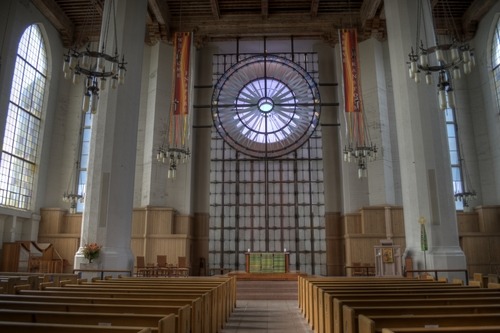
Chapel Performance Space, Good Shepherd Center, Seattle
Pre: Neal tells us that 2/3 of Neal's & Anna's wedding brass ensemble is participating. Packed! All the chairs are brought out. Big enough to be a murmuring, luscious in this space.
The governing vibe is of a pit orchestra, rather than an art orchestra. That is, there is no concerted attempt on the part of the performers to transcend themselves and become else than a group of musicians playing this music.
Full tilt expression, nothing held back, nor humor nor sorrow nor low nor high nor ought nor else.
How they end (the songs): not quite abrupt(ly).
Recorded
November 11, 2017
Banned Rehearsal 620 - Karen Eisenbrey, Keith Eisenbrey, Aaron Keyt, Neal Kosály-Meyer [October 2001]
Snare drum springs soften the sax. I revisit an old thought. Weighty massive thoughts dimple the ground. Tattered banners bothered in a chilly wind. Dampers off the strings prolong sax bleats room eloquence. Frivolity kept away. Every thought is a palpable mass.
O Mary Don't You Weep - Bruce Springsteen [from The Seeger Sessions]
As (though) recorded live in a big living room.
Banned Rehearsal 787 - Karen Eisenbrey, Keith Eisenbrey, Neal Kosály-Meyer [March 2011]
bits of sound barnacle the border
hints of vastness in the near distance
held back
drums guitar and bass a rock band
in the same sense we were ever a jazz band
"banned rehearsal" pronounced "scribble scribble"
eloquence feeds back has been trying to escape into glory
irreproducible results Neal sings!
It Was a Monday Evening
narrative church rhythm thank you very much
done found some groove we never found before and never will again
pure
Bulleya - Amit Mishra, Shipa Rao [from Bollygood Volume 2]
Values production value. What is this without its bells and whistles? Full throttle is the base line setting.
November 12, 2017
Ut Re Mi Fa Sol La - William Byrd - Elizabeth Farr
Recorded so that, or is it always that, harpsichord sound is more specifically localized than piano. It is lighter, pointier. Immense intellectual heft, lightly borne, tales within tales within could finish and be done several times but then continue on, again, into ravishing beauty.
Die Kunst der Fuge, Contrapunctus XVIII - J. S. Bach - Lionel Rogg
To be inside this fuguescape fuguemare fugeuedral aware of the granular harmony of the spirit.
2nd fugue like a chapel echoes the cathedral and looook! we can open up this wall and create a third midsize space - and finally 3rd fugue here's the choir with our Orgelmeister Kappelmeister - an architectural tour, all the sites singing. Surely if this had gone on JSB had a grander weirder place for it to get to than any such place as it had already been.
November 13, 2017
Lazy Drag - Thomas Morris [from Alan Lowe's That Devilin' Tune]
Light touch on the beat at the start, allowing them to fatten it up or thin it out as needed. Patterns of same.
Columbia's Waters - Woody Guthrie [from Columbia River Collection]
Conceit: this song is a job application in which many of WG's stock phrases are trotted out again. A window into a process of making.
For Minors Only - Chet Baker, Art Pepper [from Playboys]
Clearly, this track is a product, an object, quintessentially commercial.
Far and Wide - Brahms - Lake Washington Singers, Betty Eisenbrey, Joanne Deacon [from A Musical Souvenir: The Lake Washington Singers Spring Concert (April 11, 1961)]
Some fine piano playing there, Joanne!
Hymnen - Stockhausen
What is a theme within such a thicket?! A prop, a focus, a thread to follow, a placeholder: NOT THE SHOW.
I think to myself "this is the Stockhausen that got on the cover of Sgt. Pepper's." Extreme Ivesian quote festival. (I started composing about 10 years after this was made, and it only took me about 4 years to find it, for it to find me.) I spent a lot of time with it back in the day.
Sounds we follow as they variously incarnate and morph toward other veering incarnations.
Electronic music was what it is now, a bunch of folks playing with new toys. What sounds can we get on this? What are its sounds? Its voice? As it concerns radio: radio waves, invisible light, dark light, another dark, another sleep, another night, another wake. Front loaded: an active eventful texture, signals in transit, the harrowing descent, breathing human sleeping.
". . . nur eine Erinnerung": What does that actually do as an excuse for the böses Blut es gibt?
Some events are discrete moments, note-like - hard edged short events. Others are episodes of flange and sweep - long events. Flange-y buzz-hum-y waves rhythmed syllabically. We hear the timbre shift as a quasi-vowel shift. Thuds of war episode in third region where whistlers imitate the whole of what they are of in mimicry, in mimicry as a kind of abstraction. A full range of immediacy(ies) articulating murk.
November 14, 2017
Trust Me - Janis Joplin [from Pearl]
The plea goes on and on circling inside around the instrumentals, pleading never ending changes.
Still Crazy After All These Years - Paul Simon [from The Essential Paul Simon]
In a warm keyboard bath. Is it just me or did I really catch a partial quote of Bridge Over Troubled Water in the strings?
We're Desperate - X [from Wild Gift]
Structural density of the guitar/bass complex: leave space in the verse for the words, leave none in the chorus.
Banned Rehearsal 67 - Karen Eisenbrey, Keith Eisenbrey, Anna K, Neal Kosály-Meyer [March 1986]
In the little Greenwood half house, sneezing, heater, hooting: slide show? Conversational, sort of, in that we are doing activities and also being with each other as just folks a little bit. Bumping around is up front, music as such, in deep background. Woozy but not unpleasantly so. Making spaghetti, it sticks good. Slow swing dinner in B-flat minor. This is our trademark DING! from a junkshop in Kingston NY. The tape machine has an eraserhead button (still does, long unpushed). "I hope that was intentional or not." My dad shows up, must have been something to do with my passport. Karen may have moved up to live with Neal & Anna while interviewing. Tri-doxology, para-para-doxology (hindsight) a hindsight. It is very nice it just slips underneath the skin. Berry-ness is discussed. Wild sound on acoustic guitar.
Polly- Nirvana [from NevermindWordblurbs in exact syllabic count fitted into soundblurb segments with pitch trajectories, a partial song. (Schumann's inescapable ghost.)
Banned Rehearsal 432 - Isaac E, Karen Eisenbrey, Keith Eisenbrey, Anna K, Aaron Keyt, Neal Kosály-Meyer [August 1986]
We try to get something to work. Got those wah-wah tech blues. Aaron's synth, I believe, we struggle with the extent of our tech-savvy: this has an "in" that fits the guitar patch cord, therefore if we plug in the guitar to it we will automatically get magnificence. At the time it seemed, oddly, that nothing was happening, that the guitar strumming had no effect on what was coming out of the synth. The jury is still out on it, but the sounds of us struggling with it are fabulous. "It is my firm belief that with five more synthesizers we could achieve total silence." And yet, between the synth, the Mighty Wurzlitzer, and our direct to cassette mastering, I wonder if any prog rock band has ever sounded as good? the Tintinabulary at its finest. We don't do nicety.
Banned Rehearsal 621 - Karen Eisenbrey, Keith Eisenbrey, Aaron Keyt, Neal Kosály-Meyer [November 2001]
Nothing to hear but you. You make the sound. In our digitally produced era there is more air between the sounds, which allows more expanse of surface with which to mess, more coast to invade. Plunks and hums tiny sounds of extreme interhearing. Down to pianississimo violin tremolo and small frame drum, ocarina moving between their soundboxes' resonances, articulating a shiver whistling in the dark.
November 17, 2017
Banned Rehearsal 698 -Karen Eisenbrey, Keith Eisenbrey, Aaron Keyt, Neal Kosály-Meyer [March 2006]
Testing the waters. It generally doesn't take much to get it going, inert as it is, (though it be), just takes the right gentle push prolonged just so long. After several false-like leads: snare drum, flute and buzz, but that also falters . . or wait, now it's moving. Reasons to hang in there. Seeping into other sounds groundwater invisible under cover of underground it sneaks past the carousel skimming the feedback fence, flirting with skimming it under cover of skimming past it we flirt under darkness with the broad light of it, of past days.
Goodbye Amsterdam - Rachel Harrington [from Celilo Falls]
Relations among people occur in landscapes. How much we leave - its expanse of sorrow - when we leave each other. Gentle stutters in the guitar figures.
Banned Rehearsal 906 -Karen Eisenbrey, Keith Eisenbrey, Steve Kennedy, Aaron Keyt, Neal Kosály-Meyer [March 2016]
Neal learns himself speaking. Tiny construction workers hammering miniature hammerings. Wallace watches o'er, duets across the continent with cowbell. Lightweight sphere rolls the texture of the drumskinhead amplified by circular tension applied. Copperpipe in syntheticfoam insulationtube squeak like balloons.
In Session at the Tintinabulary
November 12, 2017
Rain Traffic Crabby Crows - Keith Eisenbrey
Our best guess is that the crows were complaining about the rain.
November 14, 2017
Kitchen - Keith Eisenbrey
For the record: I didn't break anything.
November 15, 2017
Second Thoughts - Keith Eisenbrey
I finished composing the first eight Études d'exécution imminent in May of 2014. In terms of the original chart this was the half-way point, but I needed a break to re-think myself, to consider where the composition of these had gotten me, so I took a self-imposed sabbatical from composition - indifferently observed: news of the death of J. K. Randall brought forth a response in the form of J, (September 2014), I was asked to contribute to Ben Boretz's Festschrift (Another, December 2014) and I arranged a traditional hymn tune for Karen to sing just after Christmas (Hail the Blest Morn) - altogether a fairly productive sabbatical. In the spring of 2015 I started working on these disassembled piece parts, which together constitute the 9th Etude, finishing in August, 16 months later. That was a long time for just a few notes, but I flatter myself they are densely packed. Arranged as in this (not quite perfect) performance, one after the other, the piece parts play out the re-writing of memory as it is remembered and its eventual, inevitable, loss.
November 11, 2017
Amy Denio
Truth is Up for Grabs
Chapel Performance Space, Good Shepherd Center, Seattle
Pre: Neal tells us that 2/3 of Neal's & Anna's wedding brass ensemble is participating. Packed! All the chairs are brought out. Big enough to be a murmuring, luscious in this space.
The governing vibe is of a pit orchestra, rather than an art orchestra. That is, there is no concerted attempt on the part of the performers to transcend themselves and become else than a group of musicians playing this music.
Full tilt expression, nothing held back, nor humor nor sorrow nor low nor high nor ought nor else.
How they end (the songs): not quite abrupt(ly).
Recorded
November 11, 2017
Banned Rehearsal 620 - Karen Eisenbrey, Keith Eisenbrey, Aaron Keyt, Neal Kosály-Meyer [October 2001]
Snare drum springs soften the sax. I revisit an old thought. Weighty massive thoughts dimple the ground. Tattered banners bothered in a chilly wind. Dampers off the strings prolong sax bleats room eloquence. Frivolity kept away. Every thought is a palpable mass.
O Mary Don't You Weep - Bruce Springsteen [from The Seeger Sessions]
As (though) recorded live in a big living room.
Banned Rehearsal 787 - Karen Eisenbrey, Keith Eisenbrey, Neal Kosály-Meyer [March 2011]
bits of sound barnacle the border
hints of vastness in the near distance
held back
drums guitar and bass a rock band
in the same sense we were ever a jazz band
"banned rehearsal" pronounced "scribble scribble"
eloquence feeds back has been trying to escape into glory
irreproducible results Neal sings!
It Was a Monday Evening
narrative church rhythm thank you very much
done found some groove we never found before and never will again
pure
Bulleya - Amit Mishra, Shipa Rao [from Bollygood Volume 2]
Values production value. What is this without its bells and whistles? Full throttle is the base line setting.
November 12, 2017
![]() |
| Your blogger, ca 2001 |
Recorded so that, or is it always that, harpsichord sound is more specifically localized than piano. It is lighter, pointier. Immense intellectual heft, lightly borne, tales within tales within could finish and be done several times but then continue on, again, into ravishing beauty.
Die Kunst der Fuge, Contrapunctus XVIII - J. S. Bach - Lionel Rogg
To be inside this fuguescape fuguemare fugeuedral aware of the granular harmony of the spirit.
2nd fugue like a chapel echoes the cathedral and looook! we can open up this wall and create a third midsize space - and finally 3rd fugue here's the choir with our Orgelmeister Kappelmeister - an architectural tour, all the sites singing. Surely if this had gone on JSB had a grander weirder place for it to get to than any such place as it had already been.
![]() |
| Karen and me, 1986 |
Lazy Drag - Thomas Morris [from Alan Lowe's That Devilin' Tune]
Light touch on the beat at the start, allowing them to fatten it up or thin it out as needed. Patterns of same.
Columbia's Waters - Woody Guthrie [from Columbia River Collection]
Conceit: this song is a job application in which many of WG's stock phrases are trotted out again. A window into a process of making.
For Minors Only - Chet Baker, Art Pepper [from Playboys]
Clearly, this track is a product, an object, quintessentially commercial.
Far and Wide - Brahms - Lake Washington Singers, Betty Eisenbrey, Joanne Deacon [from A Musical Souvenir: The Lake Washington Singers Spring Concert (April 11, 1961)]
Some fine piano playing there, Joanne!
Hymnen - Stockhausen
![]() |
| Karen and Isaac, 1996 |
What is a theme within such a thicket?! A prop, a focus, a thread to follow, a placeholder: NOT THE SHOW.
I think to myself "this is the Stockhausen that got on the cover of Sgt. Pepper's." Extreme Ivesian quote festival. (I started composing about 10 years after this was made, and it only took me about 4 years to find it, for it to find me.) I spent a lot of time with it back in the day.
Sounds we follow as they variously incarnate and morph toward other veering incarnations.
Electronic music was what it is now, a bunch of folks playing with new toys. What sounds can we get on this? What are its sounds? Its voice? As it concerns radio: radio waves, invisible light, dark light, another dark, another sleep, another night, another wake. Front loaded: an active eventful texture, signals in transit, the harrowing descent, breathing human sleeping.
". . . nur eine Erinnerung": What does that actually do as an excuse for the böses Blut es gibt?
Some events are discrete moments, note-like - hard edged short events. Others are episodes of flange and sweep - long events. Flange-y buzz-hum-y waves rhythmed syllabically. We hear the timbre shift as a quasi-vowel shift. Thuds of war episode in third region where whistlers imitate the whole of what they are of in mimicry, in mimicry as a kind of abstraction. A full range of immediacy(ies) articulating murk.
November 14, 2017
Trust Me - Janis Joplin [from Pearl]
The plea goes on and on circling inside around the instrumentals, pleading never ending changes.
Still Crazy After All These Years - Paul Simon [from The Essential Paul Simon]
In a warm keyboard bath. Is it just me or did I really catch a partial quote of Bridge Over Troubled Water in the strings?
We're Desperate - X [from Wild Gift]
Structural density of the guitar/bass complex: leave space in the verse for the words, leave none in the chorus.
Banned Rehearsal 67 - Karen Eisenbrey, Keith Eisenbrey, Anna K, Neal Kosály-Meyer [March 1986]
In the little Greenwood half house, sneezing, heater, hooting: slide show? Conversational, sort of, in that we are doing activities and also being with each other as just folks a little bit. Bumping around is up front, music as such, in deep background. Woozy but not unpleasantly so. Making spaghetti, it sticks good. Slow swing dinner in B-flat minor. This is our trademark DING! from a junkshop in Kingston NY. The tape machine has an eraserhead button (still does, long unpushed). "I hope that was intentional or not." My dad shows up, must have been something to do with my passport. Karen may have moved up to live with Neal & Anna while interviewing. Tri-doxology, para-para-doxology (hindsight) a hindsight. It is very nice it just slips underneath the skin. Berry-ness is discussed. Wild sound on acoustic guitar.
Polly- Nirvana [from NevermindWordblurbs in exact syllabic count fitted into soundblurb segments with pitch trajectories, a partial song. (Schumann's inescapable ghost.)
Banned Rehearsal 432 - Isaac E, Karen Eisenbrey, Keith Eisenbrey, Anna K, Aaron Keyt, Neal Kosály-Meyer [August 1986]
![]() |
| Paradise |
We try to get something to work. Got those wah-wah tech blues. Aaron's synth, I believe, we struggle with the extent of our tech-savvy: this has an "in" that fits the guitar patch cord, therefore if we plug in the guitar to it we will automatically get magnificence. At the time it seemed, oddly, that nothing was happening, that the guitar strumming had no effect on what was coming out of the synth. The jury is still out on it, but the sounds of us struggling with it are fabulous. "It is my firm belief that with five more synthesizers we could achieve total silence." And yet, between the synth, the Mighty Wurzlitzer, and our direct to cassette mastering, I wonder if any prog rock band has ever sounded as good? the Tintinabulary at its finest. We don't do nicety.
Banned Rehearsal 621 - Karen Eisenbrey, Keith Eisenbrey, Aaron Keyt, Neal Kosály-Meyer [November 2001]
Nothing to hear but you. You make the sound. In our digitally produced era there is more air between the sounds, which allows more expanse of surface with which to mess, more coast to invade. Plunks and hums tiny sounds of extreme interhearing. Down to pianississimo violin tremolo and small frame drum, ocarina moving between their soundboxes' resonances, articulating a shiver whistling in the dark.
November 17, 2017
Banned Rehearsal 698 -Karen Eisenbrey, Keith Eisenbrey, Aaron Keyt, Neal Kosály-Meyer [March 2006]
Testing the waters. It generally doesn't take much to get it going, inert as it is, (though it be), just takes the right gentle push prolonged just so long. After several false-like leads: snare drum, flute and buzz, but that also falters . . or wait, now it's moving. Reasons to hang in there. Seeping into other sounds groundwater invisible under cover of underground it sneaks past the carousel skimming the feedback fence, flirting with skimming it under cover of skimming past it we flirt under darkness with the broad light of it, of past days.
Goodbye Amsterdam - Rachel Harrington [from Celilo Falls]
Relations among people occur in landscapes. How much we leave - its expanse of sorrow - when we leave each other. Gentle stutters in the guitar figures.
Banned Rehearsal 906 -Karen Eisenbrey, Keith Eisenbrey, Steve Kennedy, Aaron Keyt, Neal Kosály-Meyer [March 2016]
Neal learns himself speaking. Tiny construction workers hammering miniature hammerings. Wallace watches o'er, duets across the continent with cowbell. Lightweight sphere rolls the texture of the drumskinhead amplified by circular tension applied. Copperpipe in syntheticfoam insulationtube squeak like balloons.
In Session at the Tintinabulary
November 12, 2017
Rain Traffic Crabby Crows - Keith Eisenbrey
Our best guess is that the crows were complaining about the rain.
November 14, 2017
Kitchen - Keith Eisenbrey
For the record: I didn't break anything.
November 15, 2017
Second Thoughts - Keith Eisenbrey
I finished composing the first eight Études d'exécution imminent in May of 2014. In terms of the original chart this was the half-way point, but I needed a break to re-think myself, to consider where the composition of these had gotten me, so I took a self-imposed sabbatical from composition - indifferently observed: news of the death of J. K. Randall brought forth a response in the form of J, (September 2014), I was asked to contribute to Ben Boretz's Festschrift (Another, December 2014) and I arranged a traditional hymn tune for Karen to sing just after Christmas (Hail the Blest Morn) - altogether a fairly productive sabbatical. In the spring of 2015 I started working on these disassembled piece parts, which together constitute the 9th Etude, finishing in August, 16 months later. That was a long time for just a few notes, but I flatter myself they are densely packed. Arranged as in this (not quite perfect) performance, one after the other, the piece parts play out the re-writing of memory as it is remembered and its eventual, inevitable, loss.
Saturday, November 19, 2016
Playlist
Live
November 12, 2016
The Campbell Brothers
University Temple United Methodist Church
This evening of friendly bluegrass-infused music was given as a benefit for the alley ministries of University Temple United Methodist Church. My long-time partner in the tenor section Dave Campbell was joined by his brother Rick Campbell - both switching variously among guitar, fiddle, banjo, mandola, and mandocello - and by Paul Elliott and Pete Goodall (on fiddle and bass respectively) for a mix of old songs and new, including covers by Bob Dylan and Bruce Springsteen. As seems to be typical with bluegrass, displays of instrumental virtuosity are interwoven with bouts of competitive self-deprecation, raised to nearly a blood sport. Many thanks to all concerned. I understand the concert raised nearly $1000!
Recorded
November 13, 2016
Hubcap - Sleater-Kinney [from Call The Doctor]
Fragmentary and unfinished - in a strong, Schumannesque way. 3 parts are repeated, with a coda of back-around-to-the-top-again to hint at cycles and cycles.
Doomsome Otherings (edit from a reading) - Keith Eisenbrey - Seattle Creative Orchestra, Roger
Nelson
Through most of the 90's I was working in a self-consciously neo-classical style, with strong echoes of Arthur Berger and 50's era Benjamin Boretz or Elaine Barkin. Doomsome Otherings (my alternate rendering of "Canonic Variations") was originally written as a viola and piano duo in 1994, riffing on what was probably a mis-hearing of the variations in Prokofiev's Piano Concerto in C Major (#3). What I thought I heard were bits of earlier variations plugged into place in the middles of later variations. So I constructed a set of five variations (or a theme and four variations, depending on how you look at it) into each variation of which, at a set place within its schema, is inserted a bit of the surface style of the variation 3 places in front. The harmonic structure of the whole set proceeds more or less independently by a schema I couldn't explain to you anymore because I can't remember it. I believe it had something to do with transformations of pentachords in two strands proceeding at different rates. I made several unsuccessful efforts to hire players to record it for me, so when the Washington Composers' Forum held a contest for orchestral readings in 2000 I decided to orchestrate it. It's probably just as hard to play as an orchestral piece as it is for viola and piano, but Roger Nelson and crew valiantly pushed through. Many thanks to Christopher Shainin for editing the various starts and stops into a single whole. I'm still pretty pleased with the piece. Any hard-core violists out there?
Don't Care If I Die - The Earaches [from The Funhouse Comp Thing]
anger at existence.
Floorplan - Youth Rescue Mission [from Youth Rescue Mission]
Warm string kodakmoment sound, but flatfooted and begrieved - there are actual living spirits in that quiet shady street!
November 14, 2016
Cançoes Profundas - Steve Peters - Steve Peters, Rafael Carvalho, Lesli Dalaba, Beth Fleenor, Paul Kikuchi, Joshua Parmenter, Naomi Siegel, Greg Sinibaldi
Now that's what I call a baptism! Extreme inundation. You, pilgrim, have been duly dunked.
(Thanks for the CD, Steve!)
Die Kunst der Fuge Contrapunctus III - J. S. Bach - Zoltan Kocsis
These gears are in such a tight space they really should seize up. But these cogs are subtly twisted. Creation as machine.
Sonata in B minor Hob XVI:32 - Haydn - Anton Nel
Delicacy and fineness of feeling achieving a state of decadence.
November 16, 2016
Die Zauberflöte Act I - Mozart - Berlin Philharmonic Orchestra, Karl Bohm
Of all Mozart's well-known operas I struggle with this one the most. Sometimes I can convince myself it all hangs together, but most of the time I can't. I was doing somewhat better this time, considering it as a parable of repression and resistance, patri- and matri-archy, animal human and civilized human. What is missing entirely are the characters that seem to have stepped living and breathing out of the past. These figures were 2D then and are still so. He could sure write a stunning tune or two though.
Sonata in A Op. 101 (#28) - Beethoven - Wilhelm Kempff
My favorite part: how those repeated chords stretch out at angry angles to any world the ostensible beat might inhabit.
Barcorolle in F-sharp Op. 60 - Chopin - Vladimir Ashkenazy
Bachlike, the melody falls to the ground in parts, spreading a single beat (from a phrase-functional standpoint) out over several measures. From theme to theme is a journey and a struggle. Before the new is achieved the old must be dismantled, and the new must be strapped together from the old's parts.
November 17, 2016
King of the Bungaloos- Gene Greene [from Alan Lowe's That Devilin' Tune]
It is difficult to separate the musical value from the icky. On the one hand the proto-scat, in-your-face onslaught of nonsense packs a punch, but in the context it comes across as yet another infantalization of African-American experience and aspiration. In the end all I can cling to is my extreme discomfort and dismay.
Harlem Strut - James P. Johnson [from Alan Lowe's That Devilin' Tune]
JPJ struts out a whole song and dance routine, complete with band and backup singers. In a way he does for Vaudeville what Liszt's transcriptions did for Beethoven symphonies.
Georgia Grind - Louis Armstrong's Hot Five - Louis Armstrong, Kid Ory, Johnny Dodds, Lil Armstrong, Johnny St. Cyr
Finds multiple x-tuple subdivisions of the shifting meter, each on, and creating, its own rhythmic plane. We have our work cut out for us, holding it all together. Those cats blowing on stage aren't letting on how they do it.
My Pretty Girl - Fletcher Henderson [from Alan Lowe's That Devilin' Tune]
A similar effect to GG above, but with whole instrumental groups playing at angles to each other, rather than individual soloists.
Romeo et Juliette, Quatrieme Tableaux - Prokofiev - Orchestre du Theatre Bolchoi de Moscou, Algis Juraitis
I couldn't help but wonder how amazingly diverse "symphonic form" would be if we all took this deeply imagined and delightfully bizarre sequence as permission and model. Such fun! The guitar standing in the corner happily reverberates the up-in-the-air ending.
Tryin' to Be True -Modern Mountaineers [from Alan Lowe's That Devilin' Tune]
The only way to tap the beat of the whole is to join in as an independent player, because that's exactly what each of them is doing. You just got to dance and that's that.
Ballin' The Jack- Art Hodes [from Alan Lowe's That Devilin' Tune]
Deep focus on all of the above.
The Rake's Progress, Act II - Stravinsky - Orchestra of St. Luke's, Robert Craft, Jayne West, Jon Garrison, Arthur Woodley, John Cheek, Shirley Love, Wendy White, Melvin Lowery, Jeffrey Johnson, Gregg Smith Singers
An opera infesting a symphonic narrative. Or: a narrative symphony dancing with an opera. I love how at one point the harmony resolves to an old-fashioned perfectly balanced triad, followed immediately by the words "I wish I were happy!"
stray notes:
The first female words of the act: "How strange".
Into the idealistic heart a knife thrusts and twists. (Why nobody really likes satire, as in "likes").
The orchestra interludes work like a curtain: it does not change and it tells you nothing.
Zeitmasse - Stockhausen - Arthur Gleghorn, Donald Muggeridge, Donald Leake, Donald Christlieb, William Ulyate
3D space created on a 2D surface by careful use of perspective alone.
November 18, 2016
Double Concerto - Elliott Carter - Contemporary Chamber Ensemble, Arthur Weisberg, Paul Jacobs, Gilbert Kalish
Bicameral. Two concertos partially conjoined - but not at the soloists.
We Could Be Happy - The Cryan Shames [a Rescued Record]
Just darling! Like the Fleetwoods if they were all guys.
Pillow of Winds - Pink Floyd [from Meddle]
More warm glow music with slidy bass.
Montreux/Berlin Concerts, Cut 7 - Anthony Braxton - The Berlin New Music Group, Gerald Humel, Anthony Braxton, George Lewis
As though AB and GL were clambering to the top of EC's DC (see above), all its clatter and spite. At the top they share some sounds. The ground softens, the trees green themselves and darken. A harp closes the book. At the very end of the track, just before the applause is faded out, somebody on stage (AB? GH?) says "Somehow we got through!"
In Session at the Tintinabulary
November 14, 2016
Banned Rehearsal 922 - Karen Eisenbrey, Keith Eisenbrey, Steve Kennedy, Neal Kosály-Meyer
Includes birthday greetings to Anchorage Aaron.
November 15, 2016
Slow Blues - Keith Eisenbrey
I have been revisiting my 1999 solo piano piece Slow Blues. The recordings I made shortly after its completion are all about 30 minutes long. I feel it moving along a bit faster now that I have gotten better acquainted with it, and this version, though still 'slow', clocks in at a bit under 18 minutes. I am taking my original dynamics and pedal marks to be suggestive guidelines rather than prescriptions. Partly this is because my current piano (an 1890 8' Chickering) responds differently than the one I had then (a 1975 6' Yamaha). For any composer-tech types out there who are interested, this is the first piece I wrote that used each mod-17 M-transform in sequence, (M0, M1, M2 . . . M16, M0) as the structural basis for a whole piece. It also takes a significant lurch out of the neo-classical, or, perhaps, slips suddenly through a crack in the floor.
November 12, 2016
The Campbell Brothers
University Temple United Methodist Church
This evening of friendly bluegrass-infused music was given as a benefit for the alley ministries of University Temple United Methodist Church. My long-time partner in the tenor section Dave Campbell was joined by his brother Rick Campbell - both switching variously among guitar, fiddle, banjo, mandola, and mandocello - and by Paul Elliott and Pete Goodall (on fiddle and bass respectively) for a mix of old songs and new, including covers by Bob Dylan and Bruce Springsteen. As seems to be typical with bluegrass, displays of instrumental virtuosity are interwoven with bouts of competitive self-deprecation, raised to nearly a blood sport. Many thanks to all concerned. I understand the concert raised nearly $1000!
Recorded
November 13, 2016
Hubcap - Sleater-Kinney [from Call The Doctor]
Fragmentary and unfinished - in a strong, Schumannesque way. 3 parts are repeated, with a coda of back-around-to-the-top-again to hint at cycles and cycles.
![]() |
| me in the 90's |
Nelson
Through most of the 90's I was working in a self-consciously neo-classical style, with strong echoes of Arthur Berger and 50's era Benjamin Boretz or Elaine Barkin. Doomsome Otherings (my alternate rendering of "Canonic Variations") was originally written as a viola and piano duo in 1994, riffing on what was probably a mis-hearing of the variations in Prokofiev's Piano Concerto in C Major (#3). What I thought I heard were bits of earlier variations plugged into place in the middles of later variations. So I constructed a set of five variations (or a theme and four variations, depending on how you look at it) into each variation of which, at a set place within its schema, is inserted a bit of the surface style of the variation 3 places in front. The harmonic structure of the whole set proceeds more or less independently by a schema I couldn't explain to you anymore because I can't remember it. I believe it had something to do with transformations of pentachords in two strands proceeding at different rates. I made several unsuccessful efforts to hire players to record it for me, so when the Washington Composers' Forum held a contest for orchestral readings in 2000 I decided to orchestrate it. It's probably just as hard to play as an orchestral piece as it is for viola and piano, but Roger Nelson and crew valiantly pushed through. Many thanks to Christopher Shainin for editing the various starts and stops into a single whole. I'm still pretty pleased with the piece. Any hard-core violists out there?
Don't Care If I Die - The Earaches [from The Funhouse Comp Thing]
anger at existence.
Floorplan - Youth Rescue Mission [from Youth Rescue Mission]
Warm string kodakmoment sound, but flatfooted and begrieved - there are actual living spirits in that quiet shady street!
November 14, 2016
Cançoes Profundas - Steve Peters - Steve Peters, Rafael Carvalho, Lesli Dalaba, Beth Fleenor, Paul Kikuchi, Joshua Parmenter, Naomi Siegel, Greg Sinibaldi
Now that's what I call a baptism! Extreme inundation. You, pilgrim, have been duly dunked.
forth comes human-babble
tongues of deep :: we mimic, talk back
a cathedral a bell we stand inside
clapper voices
the sky a bell we stand under
clapper drums
distillation of ocean roll and roar
water to water :: an island enclosed
clock tick or windroar as time
alternates crisscross in the ether
thin signals from shore
shipcalls shorecalls birdcalls whalecalls
geography as memory :: memory as geography
Die Kunst der Fuge Contrapunctus III - J. S. Bach - Zoltan Kocsis
These gears are in such a tight space they really should seize up. But these cogs are subtly twisted. Creation as machine.
Sonata in B minor Hob XVI:32 - Haydn - Anton Nel
Delicacy and fineness of feeling achieving a state of decadence.
November 16, 2016
Die Zauberflöte Act I - Mozart - Berlin Philharmonic Orchestra, Karl Bohm
Of all Mozart's well-known operas I struggle with this one the most. Sometimes I can convince myself it all hangs together, but most of the time I can't. I was doing somewhat better this time, considering it as a parable of repression and resistance, patri- and matri-archy, animal human and civilized human. What is missing entirely are the characters that seem to have stepped living and breathing out of the past. These figures were 2D then and are still so. He could sure write a stunning tune or two though.
Sonata in A Op. 101 (#28) - Beethoven - Wilhelm Kempff
My favorite part: how those repeated chords stretch out at angry angles to any world the ostensible beat might inhabit.
Barcorolle in F-sharp Op. 60 - Chopin - Vladimir Ashkenazy
Bachlike, the melody falls to the ground in parts, spreading a single beat (from a phrase-functional standpoint) out over several measures. From theme to theme is a journey and a struggle. Before the new is achieved the old must be dismantled, and the new must be strapped together from the old's parts.
November 17, 2016
King of the Bungaloos- Gene Greene [from Alan Lowe's That Devilin' Tune]
It is difficult to separate the musical value from the icky. On the one hand the proto-scat, in-your-face onslaught of nonsense packs a punch, but in the context it comes across as yet another infantalization of African-American experience and aspiration. In the end all I can cling to is my extreme discomfort and dismay.
Harlem Strut - James P. Johnson [from Alan Lowe's That Devilin' Tune]
JPJ struts out a whole song and dance routine, complete with band and backup singers. In a way he does for Vaudeville what Liszt's transcriptions did for Beethoven symphonies.
Georgia Grind - Louis Armstrong's Hot Five - Louis Armstrong, Kid Ory, Johnny Dodds, Lil Armstrong, Johnny St. Cyr
Finds multiple x-tuple subdivisions of the shifting meter, each on, and creating, its own rhythmic plane. We have our work cut out for us, holding it all together. Those cats blowing on stage aren't letting on how they do it.
My Pretty Girl - Fletcher Henderson [from Alan Lowe's That Devilin' Tune]
A similar effect to GG above, but with whole instrumental groups playing at angles to each other, rather than individual soloists.
Romeo et Juliette, Quatrieme Tableaux - Prokofiev - Orchestre du Theatre Bolchoi de Moscou, Algis Juraitis
I couldn't help but wonder how amazingly diverse "symphonic form" would be if we all took this deeply imagined and delightfully bizarre sequence as permission and model. Such fun! The guitar standing in the corner happily reverberates the up-in-the-air ending.
Tryin' to Be True -Modern Mountaineers [from Alan Lowe's That Devilin' Tune]
The only way to tap the beat of the whole is to join in as an independent player, because that's exactly what each of them is doing. You just got to dance and that's that.
Ballin' The Jack- Art Hodes [from Alan Lowe's That Devilin' Tune]
Deep focus on all of the above.
The Rake's Progress, Act II - Stravinsky - Orchestra of St. Luke's, Robert Craft, Jayne West, Jon Garrison, Arthur Woodley, John Cheek, Shirley Love, Wendy White, Melvin Lowery, Jeffrey Johnson, Gregg Smith Singers
An opera infesting a symphonic narrative. Or: a narrative symphony dancing with an opera. I love how at one point the harmony resolves to an old-fashioned perfectly balanced triad, followed immediately by the words "I wish I were happy!"
stray notes:
The first female words of the act: "How strange".
Into the idealistic heart a knife thrusts and twists. (Why nobody really likes satire, as in "likes").
The orchestra interludes work like a curtain: it does not change and it tells you nothing.
Zeitmasse - Stockhausen - Arthur Gleghorn, Donald Muggeridge, Donald Leake, Donald Christlieb, William Ulyate
3D space created on a 2D surface by careful use of perspective alone.
November 18, 2016
Double Concerto - Elliott Carter - Contemporary Chamber Ensemble, Arthur Weisberg, Paul Jacobs, Gilbert Kalish
Bicameral. Two concertos partially conjoined - but not at the soloists.
We Could Be Happy - The Cryan Shames [a Rescued Record]
Just darling! Like the Fleetwoods if they were all guys.
Pillow of Winds - Pink Floyd [from Meddle]
More warm glow music with slidy bass.
Montreux/Berlin Concerts, Cut 7 - Anthony Braxton - The Berlin New Music Group, Gerald Humel, Anthony Braxton, George Lewis
As though AB and GL were clambering to the top of EC's DC (see above), all its clatter and spite. At the top they share some sounds. The ground softens, the trees green themselves and darken. A harp closes the book. At the very end of the track, just before the applause is faded out, somebody on stage (AB? GH?) says "Somehow we got through!"
In Session at the Tintinabulary
November 14, 2016
Banned Rehearsal 922 - Karen Eisenbrey, Keith Eisenbrey, Steve Kennedy, Neal Kosály-Meyer
Includes birthday greetings to Anchorage Aaron.
November 15, 2016
Slow Blues - Keith Eisenbrey
I have been revisiting my 1999 solo piano piece Slow Blues. The recordings I made shortly after its completion are all about 30 minutes long. I feel it moving along a bit faster now that I have gotten better acquainted with it, and this version, though still 'slow', clocks in at a bit under 18 minutes. I am taking my original dynamics and pedal marks to be suggestive guidelines rather than prescriptions. Partly this is because my current piano (an 1890 8' Chickering) responds differently than the one I had then (a 1975 6' Yamaha). For any composer-tech types out there who are interested, this is the first piece I wrote that used each mod-17 M-transform in sequence, (M0, M1, M2 . . . M16, M0) as the structural basis for a whole piece. It also takes a significant lurch out of the neo-classical, or, perhaps, slips suddenly through a crack in the floor.
Saturday, November 12, 2016
Playlist
Preface
"Permission to entertain alternative experiences is neither granted nor denied."
J. K. Randall "Concerning Birds by JKR and AM:" - Open Space Magazine Issue 11 Fall 2009
Texts
November 5, 2016
Deadrones
strangely joyless, as though playing for their own headsPower Skeleton
How can you not have fun if you wear a cat mask?
The Sun Giants
Has all the parts of a standard 4-piece, drums, bass, lead and rhythm guitars w/vocals. But here it's all about the bass and her wicked quick fingers.
Recorded
November 5, 2016
Variations for Piano op. 27 - Webern - Charles Rosen
It stands right up to your eyeballs, studying your every blink.
Melancholy Baby - Earl Hines [from Alan Lowe's That Devilin' Tune]
Something about the sforzando pokes into new registers that comes across as distinctly Webernian. Well yes, see above. By the end he's got that tune dancing quickstep backwards across the tables in 8-inch heels.
'Tain't Nobody's Business If I Do - George Lewis and The Original Zenith Brass Band [from Alan Lowe's That Devilin' Tune]
Here's the shot: a circular bar, the camera aimed inward on an extracircumferential track whipping around, projected several frames per second too fast, multiple bartenders mixing drinks rapid fire, all the while juggling flaming swords.
November 6, 2016
The Rake's Progress Act I - Stravinsky - Orchestra of St. Luke's, Robert Craft, Jayne West, Jon Garrison, Arthur Woodley, John Cheek, Shirley Love, Wendy White, Melvin Lowery, Jeffrey Johnson, Gregg Smith Singers
Each ointment has its particular fly in't. Technicolor sound and stage apparatus plainly in view. It almost wears a neon sign: Caution! Ironic Remove At Work!
November 8, 2016
I'm Not A Juvenile Delinquent - Frankie Lymon and The Teenagers [collected from Dave Marsh's The Heart of Rock & Soul]
Rides happily through the clumsy engineering on stupid charm alone. I love the variations played on where exactly in the measure "No I'm not a juvenile" enters. All those "no no no no no no no's" were oddly timely.
Stand By Me - Ben E. King [collected from Dave Marsh's The Heart of Rock & Soul]
As was this. But: Triangle! Sandblock!
Adieu - Karlheinz Stockhausen - London Sinfonietta
I still remember Benjamin Boretz's comment about this: "when he runs out of ideas he lets Krenek write a measure" (paraphrase from a conversation in about 1983) - both funny and dead on as to how the affective disjuncture feels going down.
November 10, 2016
Evil Woman - The Electric Light Orchestra [Rescued Record]
Since the hook is pretty much all one can hear clearly as words, the song comes across as, effectively, a pure expression of misogyny. Yes I can look up the lyrics (I did), and yes it falls in a long tradition of vindictive breakup songs from all skews of gender and orientation, but really, the only thing that gets through is the bald brainwashing repetition: "Evil Woman Evil Woman Evil Woman . . ." Sorry guys, it's just icky.
The Montreux Berlin Concerts Cuts 5 and 6 - Anthony Braxton, George Lewis, Dave Holland, Barry Altschul
Partly a celebration of flights of improvisatory fancy, partly an indulgence of collective intricacy - precisely executed fugal scribbling.
Indiscipline - King Crimson [from Discipline]
A music reporting back on the reaction of its perpetrator. "I like it! I wish you were here to see it!"Live To Tell - Madonna - [collected from Dave Marsh's The Heart of Rock & Soul]
I was amused to discover that I could sing along with her in her own register - and my upper range isn't all that high.
Breed - Nirvana [from Nevermind]
Love the way KC's vocals imitate the guitar's downstrokes in a kind of record stuck record stuck power play. Stravinskian, perhaps.
In Session at the Tintinabulary
November 7, 2016
Gradus 302 - Neal Kosály-Meyer
Saturday, June 4, 2016
Playlist
Recorded
May 29, 2016
Long Gone - Sissle's Sizzling Syncopaters [from Alan Lowe's That Devilin' Tune]
Slippery with legato, sempre portamentissimo. Beats are slid onto, slid off from, wide and ample.
I Found a New Baby - Ethel Waters [from Alan Lowe's That Devilin' Tune]
Hearing the room, the space around the sounds.
String Quartet - Ruth Crawford Seeger - Schönberg Ensemble
The distances among the voices are precisely drawn as they answer from each other and from us: light and time, an open land. We hear foreshortened images of instrumental voices across and behind each other, not pulsing but throbbing slow like breathing.
Violin Concerto - Schönberg - State Academic Orchestra of the USSR, Alexander Lazarev, Liane Isakadze
We follow through rooms behind our host. The space is not friendly to the gracious rounding of phrases. Speech is muttered, incomplete, fragmentary - hints not statements. Remembering where you came from won't help, grimly slant.
Nowhere - Charlie Barnet [from Alan Lowe's That Devilin' Tune]
There is a thread of cowpoke rhythm (think Grofé) that runs through the whole of it, rehearing itself as a part of each new thing that comes in - and oh do they come in those new things - until it rehears itself abstractly, as the resultant hocket of independent voices.
I'm Scared - Sarah Vaughan, John Kirby and his Orchestra [from Interlude - Early Recordings 1944-1947]
Affectual non-sequitur: the way Sarah's voice comes in at the opening, like the soloist's entry in a late Mozart Concerto.
May 31, 2016
Violin Concerto - Martin - Symphony Orchestra of Radio Luxembourg, Frank Martin, Wolfgang Schneiderhan
It opens with the orchestra cycling through several concertos full of possibilities. The melodies are long, but motionless, exactly and ever just here, like monk-chant. They don't move us, rather they carve us out where we sit.
Drown In My Own Tears - Ray Charles [collected from Dave Marsh's Heart of Rock & Soul]
Transparency. Full and overfull, but absolutely plain, clear. Nothing is obscure.
Atlas Eclipticalis - Cage - Chicago Symphony Orchestra, Jame Levine
Performed as a Romantic tone-poem of the immense isolation of the stars, and of the forest dwellers peeping out and up in fear and dread. One could regard the notion of program music to be any music that maps an aspect of the extramusical realms into the musical, so this is really not so far off.
June 1, 2016
Standing In The Shadows of Love - The Four Tops [collected from Dave Marsh's Heart of Rock & Soul]
Boxes in sequence. Bits if what it is are in them. Structurally decorated, circling the predicament.
Trans (Studioaufnahme) - Stockhausen - Rundfunk-Sinfonieorchester Saarbracken, Hans Zender
Vertical bands of pitchstuff and hollowness. He's never shy of the obvious gesture, witness the opening band accumulating from the top, inversely echoed by the closing band that evaporates from the bottom.
Book of Rules - The Heptones [collected from Dave Marsh's Heart of Rock & Soul]
There are sustained tones here and there, doled out with circumspection.
Simple Gifts - Kia Sams - Prospect Choir
A dynamite little arrangement for children's and adult's choirs, clever and straightforward at once.
Begin The Begin - REM [from Life's Rich Pageant]
Thick vegetation on a hot day.
Riding On The Train- Ashtray [from Rescued Records]
The walls are close.
In Session at the Tintinabulary
May 30, 3016
Gradus 290 160530 - Neal Kosály-Meyer
May 29, 2016
Long Gone - Sissle's Sizzling Syncopaters [from Alan Lowe's That Devilin' Tune]
Slippery with legato, sempre portamentissimo. Beats are slid onto, slid off from, wide and ample.
I Found a New Baby - Ethel Waters [from Alan Lowe's That Devilin' Tune]
![]() |
| Ethel Waters |
Hearing the room, the space around the sounds.
String Quartet - Ruth Crawford Seeger - Schönberg Ensemble
The distances among the voices are precisely drawn as they answer from each other and from us: light and time, an open land. We hear foreshortened images of instrumental voices across and behind each other, not pulsing but throbbing slow like breathing.
Violin Concerto - Schönberg - State Academic Orchestra of the USSR, Alexander Lazarev, Liane Isakadze
We follow through rooms behind our host. The space is not friendly to the gracious rounding of phrases. Speech is muttered, incomplete, fragmentary - hints not statements. Remembering where you came from won't help, grimly slant.
Nowhere - Charlie Barnet [from Alan Lowe's That Devilin' Tune]
There is a thread of cowpoke rhythm (think Grofé) that runs through the whole of it, rehearing itself as a part of each new thing that comes in - and oh do they come in those new things - until it rehears itself abstractly, as the resultant hocket of independent voices.
I'm Scared - Sarah Vaughan, John Kirby and his Orchestra [from Interlude - Early Recordings 1944-1947]
Affectual non-sequitur: the way Sarah's voice comes in at the opening, like the soloist's entry in a late Mozart Concerto.
![]() |
| Frank Martin - best crinkles ever |
Violin Concerto - Martin - Symphony Orchestra of Radio Luxembourg, Frank Martin, Wolfgang Schneiderhan
It opens with the orchestra cycling through several concertos full of possibilities. The melodies are long, but motionless, exactly and ever just here, like monk-chant. They don't move us, rather they carve us out where we sit.
Drown In My Own Tears - Ray Charles [collected from Dave Marsh's Heart of Rock & Soul]
Transparency. Full and overfull, but absolutely plain, clear. Nothing is obscure.
Atlas Eclipticalis - Cage - Chicago Symphony Orchestra, Jame Levine
Performed as a Romantic tone-poem of the immense isolation of the stars, and of the forest dwellers peeping out and up in fear and dread. One could regard the notion of program music to be any music that maps an aspect of the extramusical realms into the musical, so this is really not so far off.
June 1, 2016
Standing In The Shadows of Love - The Four Tops [collected from Dave Marsh's Heart of Rock & Soul]
Boxes in sequence. Bits if what it is are in them. Structurally decorated, circling the predicament.
Trans (Studioaufnahme) - Stockhausen - Rundfunk-Sinfonieorchester Saarbracken, Hans Zender
Vertical bands of pitchstuff and hollowness. He's never shy of the obvious gesture, witness the opening band accumulating from the top, inversely echoed by the closing band that evaporates from the bottom.
Book of Rules - The Heptones [collected from Dave Marsh's Heart of Rock & Soul]
There are sustained tones here and there, doled out with circumspection.
Simple Gifts - Kia Sams - Prospect Choir
A dynamite little arrangement for children's and adult's choirs, clever and straightforward at once.
Begin The Begin - REM [from Life's Rich Pageant]
Thick vegetation on a hot day.
Riding On The Train- Ashtray [from Rescued Records]
The walls are close.
In Session at the Tintinabulary
May 30, 3016
Gradus 290 160530 - Neal Kosály-Meyer
Saturday, March 5, 2016
Playlist
Live
March 4, 2016
Seattle Composers' Salon
Chapel Performance Space, Good Shepherd Center, Seattle (guest host: James (Jim) Holt)
Jeremiah Lawson - Prelude and Fugue in F-sharp Major (acoustic guitar)
Part of what an instrument is is the relation between the size of its box and the intricacy of its articulatory potential.
Nicole Truesdell - Western States Pictorial and Crossing Parallel Lines (piano and toy piano)
Within the hesitations (between phrases, between lines, between instruments) a lively voice plays hide and seek.
Sean Osborn - selection from Four Moods for Two Bass Clarinets
Delightful play on how many of anything we might count that there are, drifting at last into the realm of the unnumbered.
Neil Welch and Marcin Pączkowski
Saxojalopies galumphing downhill at high speed, parts flying in all directions. Eloquent craziness.
Altogether another fabulous night at Seattle Composers' Salon, every piece a delight.
Recorded
February 28, 2016
Good For Northin' Joe - Lena Horne [from Alan Lowe's That Devilin' Tune]
Lena takes great care with the progress of her vowels, active to the end.
The Frim Fram Sauce - Louis Armstrong, Ella Fitzgerald, with Billy Butterfield, George Koenig, Bill Stegmeyer, Jack Greenberg, Artie Drelinger, Milton Chatz, Joe Bushkin, Danny Perri, Harman 'Trigger' Alpert, Cozy Cole [from Louis Armstrong and Guest Stars]
Almost in stripper tempo, the lyrics are an excuse for a couple of vocal show-offs.
Let Your Daddy Ride - John Lee Hooker [from The Legendary Modern Recordings 1948-1954]
All the sound is stuck tight to a chunky driving beat, like rust on an old spike.
I Wanna Play House With You - Elvis Presley [from First Live Recordings]
He leans his voice out over the top of the beat, the shoulders of it are out in front, pushed from below.
The Wanderer - Dion [collected from Dave Marsh's The Heart of Rock & Soul]
There is hardly a bit of sound in this mix that wouldn't be perfectly clear on a cheap transistor radio.
96 Tears - ? and the Mysterians [collected from Dave Marsh's The Heart of Rock & Soul]
? rides his voice from high in the back of the mouth, rolling up over the top.
Trans (Uraufführung) - Stockhausen - Sinfonie-Orchester des Südwestfunks, Ernest Bour
Choirs of instruments gnawing at the core, avoiding the Loom Monster and the Stompers - all the hazards of a gnawer's life. Something huge spins beneath the surface. Now briefly we are outside, where the spinning can't be felt (but still the Monster looms). The gnawing is getting somewhere.
At the end there are episodes of silence in the score and applause (and boobirds?) erupt into it, followed by shushushushing. As these episodes recur the shushing and the applause and boobirds play a social (or anti) coercion game with each other. I love how suddenly the music is in a room with people, people with attitudes.
Didjeridervish - 1976 - Stuart Dempster [from In the Great Abbey of Clement VI]
Stu is the larynx, the abbey is the giant's mouth, a sounding organ.
Elephant Talk - King Crimson [from Discipline]
Prog Rock, the music that arose when the musicians started hanging with the guys in the booth.
Three Rhapsodies - Elaine Barkin - Sue-Ellen Hershmann-Tcherepnin, Susan Gall, Ian Greitzer [from Open Space 16]
A wire sculpture, huge as an ocean liner, in which we the life-raft wander, weightless, narrowly lit.
March 1, 2016
Three2 - Cage - Greg Campbell, Dale Speicher, Denali Williams [from Seattle Percussion Collective]
A score is a lens of/for people's proclivities, a wedge prying open a space for use.
Sonic Brilliance 13 - [February 1996 - John E, Karen Eisenbrey, Keith Eisenbrey, Holden K, Neal Kosály-Meyer, Kia M]
In the 90's we had small children, and Sonic Brilliance was their improv session before the adults did their thing.
Your 3 Minute Mardi Gras - Christopher DeLaurenti
There is more than an undercurrent of violence in this sound. Breathless staccato jabbing.
Stormy - The Invisible Eyes [from The Funhouse Comp Thing]
The surface has been scraped, roughened, smeared - just so.
Steps - Joan Tower - Melvin Chen [from Milton Babbitt: a Composers' Memorial]
Restless birds roost and rise across the marsh. The camera pans slowly.
Amy - Amy Denio [recording of her presentation at Seattle Composers' Salon of January 2016]
Her pieces: Three Times Seventeen Equals Fifty One and Recipe for Disaster. Complete with the introduction and questions. Even more fun the second time around.
March 3, 2016
Se tu fuggi, io non resto - Gesualdo - Consort of Musicke, Anthony Rooley
We are not the speaker who does not rest, we are the attempt to flee.
Ich bin in mir vergnügt BWV 204 - J.S. Bach - Bach-Collegium Stuttgart, Helmut Rilling
The artificiality of the operatic model (recitatives and arias, etc.) is a firm bind, subtle pushes against its constraints tell more than they would in a less conventional style. Some truly fancy singing.
Keyboard Sonata in A Major Wq. 54.6 - C.P.E. Bach - Miklos Spanyi
Plain Jane configurations spoiled, almost perverted, in interesting ways. The parts of sequences diverge subtly.
Quartet in F Major Op. 17 #2 Hob. III:26 - Haydn - Tatrai Quartet
Insurrection slipping unseen between the gaps.
In Session at the Tintinabulary
February 28, 2016
Autoheterophony 160228 We Are Climbing Jacob's Ladder - Keith Eisenbrey
Fourth in this series, exploring the songs I learned in church as a kid.
February 29, 2016
Gradus 285 - Neal Kosály-Meyer
![]() |
| My journal notes from Salon |
March 4, 2016
Seattle Composers' Salon
Chapel Performance Space, Good Shepherd Center, Seattle (guest host: James (Jim) Holt)
Jeremiah Lawson - Prelude and Fugue in F-sharp Major (acoustic guitar)
Part of what an instrument is is the relation between the size of its box and the intricacy of its articulatory potential.
Nicole Truesdell - Western States Pictorial and Crossing Parallel Lines (piano and toy piano)
Within the hesitations (between phrases, between lines, between instruments) a lively voice plays hide and seek.
Sean Osborn - selection from Four Moods for Two Bass Clarinets
Delightful play on how many of anything we might count that there are, drifting at last into the realm of the unnumbered.
Neil Welch and Marcin Pączkowski
Saxojalopies galumphing downhill at high speed, parts flying in all directions. Eloquent craziness.
Altogether another fabulous night at Seattle Composers' Salon, every piece a delight.
Recorded
February 28, 2016
Good For Northin' Joe - Lena Horne [from Alan Lowe's That Devilin' Tune]
Lena takes great care with the progress of her vowels, active to the end.
The Frim Fram Sauce - Louis Armstrong, Ella Fitzgerald, with Billy Butterfield, George Koenig, Bill Stegmeyer, Jack Greenberg, Artie Drelinger, Milton Chatz, Joe Bushkin, Danny Perri, Harman 'Trigger' Alpert, Cozy Cole [from Louis Armstrong and Guest Stars]
Almost in stripper tempo, the lyrics are an excuse for a couple of vocal show-offs.
Let Your Daddy Ride - John Lee Hooker [from The Legendary Modern Recordings 1948-1954]
All the sound is stuck tight to a chunky driving beat, like rust on an old spike.
I Wanna Play House With You - Elvis Presley [from First Live Recordings]
He leans his voice out over the top of the beat, the shoulders of it are out in front, pushed from below.
The Wanderer - Dion [collected from Dave Marsh's The Heart of Rock & Soul]
There is hardly a bit of sound in this mix that wouldn't be perfectly clear on a cheap transistor radio.
![]() |
| ? and The Mysterians |
? rides his voice from high in the back of the mouth, rolling up over the top.
Trans (Uraufführung) - Stockhausen - Sinfonie-Orchester des Südwestfunks, Ernest Bour
Choirs of instruments gnawing at the core, avoiding the Loom Monster and the Stompers - all the hazards of a gnawer's life. Something huge spins beneath the surface. Now briefly we are outside, where the spinning can't be felt (but still the Monster looms). The gnawing is getting somewhere.
At the end there are episodes of silence in the score and applause (and boobirds?) erupt into it, followed by shushushushing. As these episodes recur the shushing and the applause and boobirds play a social (or anti) coercion game with each other. I love how suddenly the music is in a room with people, people with attitudes.
Didjeridervish - 1976 - Stuart Dempster [from In the Great Abbey of Clement VI]
Stu is the larynx, the abbey is the giant's mouth, a sounding organ.
Elephant Talk - King Crimson [from Discipline]
Prog Rock, the music that arose when the musicians started hanging with the guys in the booth.
Three Rhapsodies - Elaine Barkin - Sue-Ellen Hershmann-Tcherepnin, Susan Gall, Ian Greitzer [from Open Space 16]
A wire sculpture, huge as an ocean liner, in which we the life-raft wander, weightless, narrowly lit.
March 1, 2016
Three2 - Cage - Greg Campbell, Dale Speicher, Denali Williams [from Seattle Percussion Collective]
A score is a lens of/for people's proclivities, a wedge prying open a space for use.
Sonic Brilliance 13 - [February 1996 - John E, Karen Eisenbrey, Keith Eisenbrey, Holden K, Neal Kosály-Meyer, Kia M]
In the 90's we had small children, and Sonic Brilliance was their improv session before the adults did their thing.
Your 3 Minute Mardi Gras - Christopher DeLaurenti
There is more than an undercurrent of violence in this sound. Breathless staccato jabbing.
Stormy - The Invisible Eyes [from The Funhouse Comp Thing]
The surface has been scraped, roughened, smeared - just so.
Steps - Joan Tower - Melvin Chen [from Milton Babbitt: a Composers' Memorial]
Restless birds roost and rise across the marsh. The camera pans slowly.
Amy - Amy Denio [recording of her presentation at Seattle Composers' Salon of January 2016]
Her pieces: Three Times Seventeen Equals Fifty One and Recipe for Disaster. Complete with the introduction and questions. Even more fun the second time around.
March 3, 2016
Se tu fuggi, io non resto - Gesualdo - Consort of Musicke, Anthony Rooley
We are not the speaker who does not rest, we are the attempt to flee.
Ich bin in mir vergnügt BWV 204 - J.S. Bach - Bach-Collegium Stuttgart, Helmut Rilling
The artificiality of the operatic model (recitatives and arias, etc.) is a firm bind, subtle pushes against its constraints tell more than they would in a less conventional style. Some truly fancy singing.
Keyboard Sonata in A Major Wq. 54.6 - C.P.E. Bach - Miklos Spanyi
Plain Jane configurations spoiled, almost perverted, in interesting ways. The parts of sequences diverge subtly.
Quartet in F Major Op. 17 #2 Hob. III:26 - Haydn - Tatrai Quartet
Insurrection slipping unseen between the gaps.
In Session at the Tintinabulary
February 28, 2016
Autoheterophony 160228 We Are Climbing Jacob's Ladder - Keith Eisenbrey
Fourth in this series, exploring the songs I learned in church as a kid.
February 29, 2016
Gradus 285 - Neal Kosály-Meyer
Saturday, April 25, 2015
Playlist
Live
April 23, 2015
Nick Norton, John Teske, Nat Evans
Chapel Performance Space, Good Shepherd Center, Seattle
New Forest - Nat Evans
We arrived about 20 minutes in, so the first experience was simply that of entering a room from which a particular color of quietness emanated. Upon this fabric was set, at long intervals, a couple of older jazz recordings. There was enough space between these that they didn't become the main focus, but operated as markers, cairns, a known place for our own calibration.
Does it help, or is it essential, to know certain facts about a music in order to perceive it most clearly? I had known a little going in: that it involved field recordings made on Nat's recent trek on the Pacific Coast Trail. In the notes it is disclosed that these particular recordings are from forest areas that had been clearcut in the '40s or '50s, and that the recordings are 78s inherited from Nat's grandfather, who studied forestry at about that time. This is all interesting from a journalistic perspective, but I remain skeptical that the knowledge of it improves the aesthetic experience.
For my part, the hardcore interaction between the presence of the forest sound as it fell into distance and the etched surface of the surfacing past of the 78s sound was the big hit. The rest is just part of what it took Nat to get there, it isn't the there. It is important to Nat's relation to his work, but not necessarily to ours.
Texture Sketch I - Nick Norton
Allison Fann, viola; Ivan Arteaga, alto saxophone; Nick Norton, guitar; Neil Welch, tenor saxophone; Peter Tracy, cello; John Teske, double bass
A skein that tightens as it rises.
All The Wrong Notes - Nick Norton
Cristina Valdes, piano
Two-fisted piano writing written, apparently, in order for there to be another piece of two-fisted piano music. Cristina was fabulous as always, but this one failed to convince.
topographies - John Teske
same personnel as in Texture Sketch I
I have been a map nut from a tender age, so this piece plugs into several of my nerd-nodes. In the observation of landforms we can surmise numerous processes and forces and materials at work. Maps are abstracts of the results, representations of several dimensions of data on a surface. Those abstractions are used as a stimulus to other forces, processes and personalities (with all their inscrutable complexities) in order to produce a sound which is itself an abstraction of all the underlying data and which, as it presents itself in time, comes across as nothing so much as landforms made audible.
It was a pleasure to hear these again.
Recorded
April 18, 2015
Symphony #3 op. 27 "Sinfonia Espansiva" - Carl Nielsen - Danish Radio Symphony Orchestra, Yuri Ahronovitch
This is big drama music that doesn't behave like a stage drama. It is more high steel than Macbeth. Its parts don't fit together with specious inevitability, but are set against each other and folded into each other curatorially. Each episode is enlivened inside itself rather than tensing us into looking where we are going. No matter where one listens in this music it is as though there were a ripple in the glass. Nothing can be heard straight.
Violin Concerto #1 - Karol Szymanowski - Czech Philharmonic Orchestra, Jan Krenz, Shizuka Ishikawa
As though Wagner's forest bird had wandered into the first scene of Pelleas and never recovered.
April 20, 2015
Symphony in B-flat (#2) - Albert Roussel - Orchestre National de France, Charles Dutoit
Begins by repeatedly breaking from darkness into darkness. It eventually bursts into energy, though it never escapes the morass.
Tapiola - Jean Sibelius - Boston Symphony Orchestra, Colin Davis
Threadbare, stained, faded. Worn utterly away in many places, in others preserved in sudden flashes from another realm. This fairy tale is less Disney, more Grimm.
Concerto in B-flat (#4) op. 53 - Serge Prokofiev - Polish Radio National Symphony Orchestra, Antoni Wit, Kun Woo Paik
Punched, squeezed, and shoved into place. Build them, put them on a shelf. There they stay.
April 21, 2014
Symphony #4 - Dmitri Shostakovich - Moscow Philharmonic Symphony Orchestra, Kiril Kondrashin
An immense quantity of individual rooms, voices speaking in layers of imperiled code. Not heartfelt because it can't be. Intricately speaking to its own inability to speak.
April 22, 2014
Gold and The Señor Commandante Ballet Suite - William Bergsma - Eastman-Rochester Symphony Orchestra, Howard Hanson
One regret I have looking back on my years at the UW was that I never took any classes from William Bergsma. Here it is demonstrated that he composed the Jaws not safe in the water right now theme several decades before it wasn't safe in the water anymore. The wickedly fabulous Eastman-Rochester crew sound great here, engineered so that the dynamic contrasts take your breath away.
Symphony #2 - Roger Sessions - New York Philharmonic, Dimitri Mitropoulos
Muscular, taut, frenetic - all apropos of 1946.
String Quartet #1 - Elliott Carter - Julliard String Quartet
Pushing the extremes of voice/instrument integrity and contrapuntal independence, with a gut punch intensity.
Blueberry Hill - Fats Domino [collected from Dave Marsh's Heart of Rock and Soul]
Smooth and solid. Nothing stands out until the last drum bang.
Klavierstuck 10 - Karlheinz Stockhausen - Aloys Kontarsky
A discourse on our sense of quantity. Some aspects are clearly numerable. Others are clearly not.
In Session at the Tintinabulary
April 19, 2015
Duet 150419 - Keith Eisenbrey
I was on vacation this week so I was very busy. This first duet features my mom's nylon string guitar (Franciscan) and the contents of the big red bag of fun.
April 20, 2015
Gradus 264 - Neal Kosály-Meyer
If the piano keyboard represents a binary numbering system (played = 1, not played = 0), then each combination can be represented by a quantity. We could do math!
April 21, 2015
Duet 150421 - Keith Eisenbrey
This day's duet was with upright grand piano (1908 Kingsbury) in need of tuning, and snare drum (Gretsch).
April 22, 2015
Duet 150422 - Keith Eisenbrey
Viola and pendant pot lids.
April 23, 2015
Duet 150423 - Keith Eisenbrey
Acoustic guitar with pickup (Mitchell) through a Sunn amp, paired with a locally made wood-body drum (Sawatch).
Études d'exécution imminent - Keith Eisenbrey
This was my last composition before I went on a self-imposed sabbatical last Spring. I am fascinated with music that lives at the edge of its own beingness - pieces that are only just barely pieces, or perhaps aren't quite. I've been working them up for presentation next August, and took the opportunity afforded by my vacation to record them.
April 24, 2015
Duet 150424 - Keith Eisenbrey
Solid body electric guitar (Peavey) on long-term loan from my brother Paul, and bodhrán. I learned (while making sure I spelled that correctly) that the little wooden beater is called a 'tipper'. I turned the amp up pretty loud.
April 23, 2015
Nick Norton, John Teske, Nat Evans
Chapel Performance Space, Good Shepherd Center, Seattle
New Forest - Nat Evans
We arrived about 20 minutes in, so the first experience was simply that of entering a room from which a particular color of quietness emanated. Upon this fabric was set, at long intervals, a couple of older jazz recordings. There was enough space between these that they didn't become the main focus, but operated as markers, cairns, a known place for our own calibration.
Does it help, or is it essential, to know certain facts about a music in order to perceive it most clearly? I had known a little going in: that it involved field recordings made on Nat's recent trek on the Pacific Coast Trail. In the notes it is disclosed that these particular recordings are from forest areas that had been clearcut in the '40s or '50s, and that the recordings are 78s inherited from Nat's grandfather, who studied forestry at about that time. This is all interesting from a journalistic perspective, but I remain skeptical that the knowledge of it improves the aesthetic experience.
For my part, the hardcore interaction between the presence of the forest sound as it fell into distance and the etched surface of the surfacing past of the 78s sound was the big hit. The rest is just part of what it took Nat to get there, it isn't the there. It is important to Nat's relation to his work, but not necessarily to ours.
Texture Sketch I - Nick Norton
Allison Fann, viola; Ivan Arteaga, alto saxophone; Nick Norton, guitar; Neil Welch, tenor saxophone; Peter Tracy, cello; John Teske, double bass
A skein that tightens as it rises.
All The Wrong Notes - Nick Norton
Cristina Valdes, piano
Two-fisted piano writing written, apparently, in order for there to be another piece of two-fisted piano music. Cristina was fabulous as always, but this one failed to convince.
topographies - John Teske
same personnel as in Texture Sketch I
I have been a map nut from a tender age, so this piece plugs into several of my nerd-nodes. In the observation of landforms we can surmise numerous processes and forces and materials at work. Maps are abstracts of the results, representations of several dimensions of data on a surface. Those abstractions are used as a stimulus to other forces, processes and personalities (with all their inscrutable complexities) in order to produce a sound which is itself an abstraction of all the underlying data and which, as it presents itself in time, comes across as nothing so much as landforms made audible.
It was a pleasure to hear these again.
Recorded
April 18, 2015
Symphony #3 op. 27 "Sinfonia Espansiva" - Carl Nielsen - Danish Radio Symphony Orchestra, Yuri Ahronovitch
This is big drama music that doesn't behave like a stage drama. It is more high steel than Macbeth. Its parts don't fit together with specious inevitability, but are set against each other and folded into each other curatorially. Each episode is enlivened inside itself rather than tensing us into looking where we are going. No matter where one listens in this music it is as though there were a ripple in the glass. Nothing can be heard straight.
![]() |
| Karol Szymanowski |
As though Wagner's forest bird had wandered into the first scene of Pelleas and never recovered.
April 20, 2015
Symphony in B-flat (#2) - Albert Roussel - Orchestre National de France, Charles Dutoit
Begins by repeatedly breaking from darkness into darkness. It eventually bursts into energy, though it never escapes the morass.
Tapiola - Jean Sibelius - Boston Symphony Orchestra, Colin Davis
Threadbare, stained, faded. Worn utterly away in many places, in others preserved in sudden flashes from another realm. This fairy tale is less Disney, more Grimm.
Concerto in B-flat (#4) op. 53 - Serge Prokofiev - Polish Radio National Symphony Orchestra, Antoni Wit, Kun Woo Paik
Punched, squeezed, and shoved into place. Build them, put them on a shelf. There they stay.
April 21, 2014
Symphony #4 - Dmitri Shostakovich - Moscow Philharmonic Symphony Orchestra, Kiril Kondrashin
An immense quantity of individual rooms, voices speaking in layers of imperiled code. Not heartfelt because it can't be. Intricately speaking to its own inability to speak.
![]() |
| William Bergsma |
Gold and The Señor Commandante Ballet Suite - William Bergsma - Eastman-Rochester Symphony Orchestra, Howard Hanson
One regret I have looking back on my years at the UW was that I never took any classes from William Bergsma. Here it is demonstrated that he composed the Jaws not safe in the water right now theme several decades before it wasn't safe in the water anymore. The wickedly fabulous Eastman-Rochester crew sound great here, engineered so that the dynamic contrasts take your breath away.
Symphony #2 - Roger Sessions - New York Philharmonic, Dimitri Mitropoulos
Muscular, taut, frenetic - all apropos of 1946.
String Quartet #1 - Elliott Carter - Julliard String Quartet
Pushing the extremes of voice/instrument integrity and contrapuntal independence, with a gut punch intensity.
Blueberry Hill - Fats Domino [collected from Dave Marsh's Heart of Rock and Soul]
Smooth and solid. Nothing stands out until the last drum bang.
Klavierstuck 10 - Karlheinz Stockhausen - Aloys Kontarsky
A discourse on our sense of quantity. Some aspects are clearly numerable. Others are clearly not.
In Session at the Tintinabulary
April 19, 2015
Duet 150419 - Keith Eisenbrey
I was on vacation this week so I was very busy. This first duet features my mom's nylon string guitar (Franciscan) and the contents of the big red bag of fun.
April 20, 2015
Gradus 264 - Neal Kosály-Meyer
If the piano keyboard represents a binary numbering system (played = 1, not played = 0), then each combination can be represented by a quantity. We could do math!
April 21, 2015
Duet 150421 - Keith Eisenbrey
This day's duet was with upright grand piano (1908 Kingsbury) in need of tuning, and snare drum (Gretsch).
April 22, 2015
Duet 150422 - Keith Eisenbrey
Viola and pendant pot lids.
April 23, 2015
Duet 150423 - Keith Eisenbrey
Acoustic guitar with pickup (Mitchell) through a Sunn amp, paired with a locally made wood-body drum (Sawatch).
Études d'exécution imminent - Keith Eisenbrey
This was my last composition before I went on a self-imposed sabbatical last Spring. I am fascinated with music that lives at the edge of its own beingness - pieces that are only just barely pieces, or perhaps aren't quite. I've been working them up for presentation next August, and took the opportunity afforded by my vacation to record them.
April 24, 2015
Duet 150424 - Keith Eisenbrey
Solid body electric guitar (Peavey) on long-term loan from my brother Paul, and bodhrán. I learned (while making sure I spelled that correctly) that the little wooden beater is called a 'tipper'. I turned the amp up pretty loud.
Saturday, March 29, 2014
Playlist
Recorded
March 23, 2014
Symphony in E-flat - Edward Elgar - Giuseppe Sinopoli
triumphal moment follows
elegant threads to cottage doors
from victory in a bright clime
(but now we're at this elegant ball!)
reservoirs of stolid resolve.
alternatives activate deflection,
potentiates hyperextension
(and that is why we safely sleep.)
Renard The Fox - Stravinsky - Orchestre de L'Opera National De Paris, James Conlon
A tight rein on the affect - a quicktime staccato - allows an extraordinary precision of meter and timbre. The more bare-bones styles of rock and roll work this same trick on occasion.
March 24, 2014
![]() |
| Carl Ruggles |
Angels (for 6 trumpets) - Carl Ruggles - Studio Brass Ensemble
A former eternity, staring.
March 25, 2014
Lyric Suite - Alban Berg - LaSalle Quartet
Our footing is insecure. We can use contour similarity as an earguide, but sequential figures tend to reconfigure themselves en route. In the absolute middle of the piece it drifts away and that's it.
Concerto in D - Maurice Ravel - Paris National Orchestra, Paul Paray, Monique Haas
Episodes in an arrival, from beyond a hill, of something huge.
Jeu de Cartes - Stravinsky - London Symphony Orchestra - Colin Davis
At it's best when it becomes so self-involved it forgets to please.
March 27, 2014
Sinfonietta - Walter Piston - New York Chamber Symphony of the 92nd Street Y, Gerard Schwarz
Always on firm thematic ground, it moves like a snake in seamless glides, and always keeps its head down. The middle movement crawls inside.
![]() |
| Kid Ory |
1919 Rag - Kid Ory [from Allen Lowe's That Devilin' Tune]
Fabulous, but old-fashioned. The song structure is clearly audible inside the hoopla.
Formel - Karlheinz Stockhausen - Sinfonie-Orchester des Sudwestfunks, Karlheinz Stockhausen
Deeply concerned with its own rhetoric, with how it explicates itself. The strongest sense in which it is a piece comes from its single-minded approach to tipping its own hand.
Need Your Love So Bad - Little Willie John [collected from Dave Marsh's The Heart of Rock & Soul]
guitarist to die for.
Ram-Bunk-Shush - The Ventures [from Walk Don't Run]
![]() |
| Cecil Taylor |
Enter Evening - Cecil Taylor [from The Smithsonian Collection of Classic Jazz]
Simultaneously articulate on multiple planes.
Slipped, Tripped and Fell In Love - Ann Peebles [from Original Funk Soul Sister The Best of Ann Peebles]
The title could be a romantic comedy, but the song itself is deliciously bitter.
In Session at the Tintinabulary
March 23, 2014
Crestline 140323 - Keith Eisenbrey
(tenor banjo)
March 24, 2014
Banned Rehearsal 855 - Karen Eisenbrey, Keith Eisenbrey, Steve Kennedy, Aaron Keyt, Neal Kosály-Meyer
Upcoming
A Cat's Life Returns Again - a recital by Keith Eisenbrey, piano, with special guest Olivia Sterne, narrator
Chapel Performance Space, Good Shepherd Center, Seattle
Attitude - Doug Palmer
Greek Nickel 2 - J. K. Randall
Sonata (2012) - Aaron Keyt
A Cat's Life, a little opera for solo piano (1990) - Keith Eisenbrey
June 27, 2014 - 8 PM
Banned Rehearsal Celebrates 30 Years of Noise
Chapel Performance Space, Good Shepherd Center, Seattle
Sunday, March 24, 2013
Playlist
Live
March 16, 2013
Quarisima Italiana
Seattle Choral Company, Freddie Coleman, conductor
St. Mark's Cathedral, Seattle
Stabat Mater Dolorosa - Liber Usualis
Stabat Mater à 8 for two choirs - Palestrina
The mere separation in space between the two choirs is nothing in comparison with the play of depths among the voices.
Stabat Mater à 10 - Scarlatti
An immensity. As though the entire scale of interactions from molecular to cosmic were immanent to mind.
Crucifixus à 16 - Antonia Caldara
Solid. Blinding.
March 16, 2013
Quarisima Italiana
St. Mark's Cathedral, Seattle
Stabat Mater Dolorosa - Liber Usualis
Stabat Mater à 8 for two choirs - Palestrina
The mere separation in space between the two choirs is nothing in comparison with the play of depths among the voices.
Stabat Mater à 10 - Scarlatti
An immensity. As though the entire scale of interactions from molecular to cosmic were immanent to mind.
Crucifixus à 16 - Antonia Caldara
Solid. Blinding.
Messa di Requiem - Ildebrando Pizzetti
Ben Boretz once asked "Can a symphony for big orchestra be from the heart?" The same question could be asked of choral music for cathedral spaces. This piece, without question, is, but that the answer is more often "yes" than it is for orchestra may be linked partly to the social theater involved. A chorus, in general, looks directly at us and sings to us. An orchestra, in general, sits in mixed attitude to us, their sound mediated by the technological marvels which are their instruments.
Ave Maria (from Four Sacred Pieces) - Verdi
Late, twisted chromatics hearken back to Brahms or Bruckner motets, but also to some of the same sly energy as in Strauss's Metamorphosen.
Recorded
March 17, 2013
Banned Sectional 1 KEE AK - (June 1985, Keith Eisenbrey, Aaron Keyt)
One of several sessions over the years centered on my 1981/1982 score Book of Windows. In this case I was reading that portion of the text that was riffing on a line from Stockhausen's Hymnen: "Wir können noch ein Dimension tiefer gehen." with each page getting a new treatment.
Live at Consolidated Works - Intonarumori [from Sonicabal 2001]
Lingua mechanica - Machine lingo.
March 19, 2013
Banned Rehearsal 593 - (December 2000, Karen Eisenbrey, Keith Eisenbrey, Anna K, Aaron Keyt, Isabel Kosály-Meyer, Neal Meyer)
The sound of the late evening wearies.
In Session at The Tintinabulary
March 18, 2013
Banned Rehearsal 833 - Karen Eisenbrey, Keith Eisenbrey, Steve Kennedy, Aaron Keyt, Neal Meyer
March 21, 2013
Your Mother Should Know
Love Blackmail, Boundary
Late, twisted chromatics hearken back to Brahms or Bruckner motets, but also to some of the same sly energy as in Strauss's Metamorphosen.
Recorded
March 17, 2013
Banned Sectional 1 KEE AK - (June 1985, Keith Eisenbrey, Aaron Keyt)
One of several sessions over the years centered on my 1981/1982 score Book of Windows. In this case I was reading that portion of the text that was riffing on a line from Stockhausen's Hymnen: "Wir können noch ein Dimension tiefer gehen." with each page getting a new treatment.
Live at Consolidated Works - Intonarumori [from Sonicabal 2001]
Lingua mechanica - Machine lingo.
March 19, 2013
Banned Rehearsal 593 - (December 2000, Karen Eisenbrey, Keith Eisenbrey, Anna K, Aaron Keyt, Isabel Kosály-Meyer, Neal Meyer)
The sound of the late evening wearies.
In Session at The Tintinabulary
March 18, 2013
Banned Rehearsal 833 - Karen Eisenbrey, Keith Eisenbrey, Steve Kennedy, Aaron Keyt, Neal Meyer
March 21, 2013
Your Mother Should Know
Love Blackmail, Boundary
Saturday, March 12, 2011
Playlist
Recorded
3/5/2011
Suite in d BWV 811 - JS Bach - Colin Tilney
3/6/2011
Waltz in A-flat op. 34 #1 - Chopin - Peter Katin
A little family group of waltzes: Papa Waltz, Mama Waltz, Handsome Bro' Waltz, and Giddy Little Sister Waltz - all introduced with great fanfare.
That Lovin' Rag - Sophie Tucker
Cataract Love - Hitch's Happy Harmonists
Symphony of Psalms - Stravinsky - CBC SO/Stravinsky
The material: a complex of infra-referential sounds that carry an image of coherence. They are parts of a thought and we recognize the parts of it as being the parts of that thought. How? Parametric set identity certainly plays a part, but also, I think, a plastic sense of parametric set proximity, or set similarity, as grasped and measured on the fly. Part of our psycho-acoustic apparatus is the bundling of raw sounds into the sounds of some thing in particular - the sound of that note, that violin, that choral voice, that phrase. Stravinsky's compositional ear loves to twist our habits of bundling into paths that astound us: "How did I make that connection?"
3/7/2011
Xango - Villa-Lobos - New York Chamber Orchestra/Gerard Schwarz/Robert Bonfiglio
Variations for Orchestra op. 30 - Webern - London SO/Boulez
See above, re: Symphony of Psalms.
Ebony Concerto - Stravinsky - Netherlands Wind Ensemble/Edo de Waart/George Pieterson
Probably the most interesting conversation that Stravinsky and Ellington never had. Wish I'd been there.
Solitaire - Stan Kenton
3/8/2011
Hearts of Stone (recorded live) - Elvis Presley
Wind Quintet #2 - George Perle
Mikrophonie II - Stockhausen - Studio-Chores fur Neue Musik Koln/Herbert Schemus/Alfons Kontarsky
The heavy ring-modulation throughout leaves me with a sense of oppression, or suppression.
3/10/2011
Psalm 23 Dominus pascit me - Ivan Hrusovsky - Tirnavia/Andrej Rapant/Stanislav Surin
Quit Kickin' My Dog Around - Delbert Spray, Art Rosenbaum
Tattoo You - The Rolling Stones
The antiseptic engineering gives the stripped-down arrangements on this album an interesting edge.
Live
3/11/2011
Christopher DeLaurenti at the Chapel Performance Space, Good Shepherd Center, Seattle
Christopher improvised two sets on his laptop, each of which ended with an extended exploration of his recent recordings of local singers rendering the torch song You're My Thrill. In the first set we heard untreated field recordings as well as sounds from at least one earlier work that I recognized. In the second the source sounds were heavily treated before being allowed into the loudspeakers.
Sounds simple enough, but as usual with Christopher's shows I was left with more topics of thought than there is space here to discuss: The experienced relations between textual fragments and a presumed underlying song form, the relations among live sounds from out- and in-side the performance space and sounds brought in from the outside and then broadcast to the inside, time past and time present, multiple times past and multiple times present, what counts as treated and what registers as treated, the relation between the experience of registering a sound as being treated and the experience of the particular treatedness of the sound, the peculiarities of hearing the "same thing" twice in two different settings (does it make the same thing sound more the same or less the same, and does it make the two different settings sound more different or less different - or is it a fascinating shading among the various possibilities?), etc.
All this and it was often quite ravishingly lovely too. An extended segment in the middle of the second set in which two pitched sounds were imperceptibly perceived to shift downward was breathtaking, and the concatenate performance of Thrill, chopped into phrase segments and shuffled tenderly together, was both sexy and poignant, occupying a personal space not quite so distanced as to prevent a blush, and just near enough to tempt the feeling of an intrusion on an intimacy not our own.
3/5/2011
Suite in d BWV 811 - JS Bach - Colin Tilney
3/6/2011
Waltz in A-flat op. 34 #1 - Chopin - Peter Katin
A little family group of waltzes: Papa Waltz, Mama Waltz, Handsome Bro' Waltz, and Giddy Little Sister Waltz - all introduced with great fanfare.
That Lovin' Rag - Sophie Tucker
Cataract Love - Hitch's Happy Harmonists
Symphony of Psalms - Stravinsky - CBC SO/Stravinsky
The material: a complex of infra-referential sounds that carry an image of coherence. They are parts of a thought and we recognize the parts of it as being the parts of that thought. How? Parametric set identity certainly plays a part, but also, I think, a plastic sense of parametric set proximity, or set similarity, as grasped and measured on the fly. Part of our psycho-acoustic apparatus is the bundling of raw sounds into the sounds of some thing in particular - the sound of that note, that violin, that choral voice, that phrase. Stravinsky's compositional ear loves to twist our habits of bundling into paths that astound us: "How did I make that connection?"
3/7/2011
Xango - Villa-Lobos - New York Chamber Orchestra/Gerard Schwarz/Robert Bonfiglio
Variations for Orchestra op. 30 - Webern - London SO/Boulez
See above, re: Symphony of Psalms.
Ebony Concerto - Stravinsky - Netherlands Wind Ensemble/Edo de Waart/George Pieterson
Probably the most interesting conversation that Stravinsky and Ellington never had. Wish I'd been there.
Solitaire - Stan Kenton
3/8/2011
Hearts of Stone (recorded live) - Elvis Presley
Wind Quintet #2 - George Perle
Mikrophonie II - Stockhausen - Studio-Chores fur Neue Musik Koln/Herbert Schemus/Alfons Kontarsky
The heavy ring-modulation throughout leaves me with a sense of oppression, or suppression.
3/10/2011
Psalm 23 Dominus pascit me - Ivan Hrusovsky - Tirnavia/Andrej Rapant/Stanislav Surin
Quit Kickin' My Dog Around - Delbert Spray, Art Rosenbaum
Tattoo You - The Rolling Stones
The antiseptic engineering gives the stripped-down arrangements on this album an interesting edge.
Live
3/11/2011
Christopher DeLaurenti at the Chapel Performance Space, Good Shepherd Center, Seattle
Christopher improvised two sets on his laptop, each of which ended with an extended exploration of his recent recordings of local singers rendering the torch song You're My Thrill. In the first set we heard untreated field recordings as well as sounds from at least one earlier work that I recognized. In the second the source sounds were heavily treated before being allowed into the loudspeakers.
Sounds simple enough, but as usual with Christopher's shows I was left with more topics of thought than there is space here to discuss: The experienced relations between textual fragments and a presumed underlying song form, the relations among live sounds from out- and in-side the performance space and sounds brought in from the outside and then broadcast to the inside, time past and time present, multiple times past and multiple times present, what counts as treated and what registers as treated, the relation between the experience of registering a sound as being treated and the experience of the particular treatedness of the sound, the peculiarities of hearing the "same thing" twice in two different settings (does it make the same thing sound more the same or less the same, and does it make the two different settings sound more different or less different - or is it a fascinating shading among the various possibilities?), etc.
All this and it was often quite ravishingly lovely too. An extended segment in the middle of the second set in which two pitched sounds were imperceptibly perceived to shift downward was breathtaking, and the concatenate performance of Thrill, chopped into phrase segments and shuffled tenderly together, was both sexy and poignant, occupying a personal space not quite so distanced as to prevent a blush, and just near enough to tempt the feeling of an intrusion on an intimacy not our own.
Saturday, March 5, 2011
Playlist
Recorded
2/26/2011
The Unashamed Accompanist - Gerald Moore
I don't want to make too much of this recorded lecture by the eminent accompanist, the main point of which is that accompanists have a difficult but rewarding job and that 19th Century art songs are duets in which both pianist and singer have important roles. Hardly earth-shaking propositions. But a common attitude about words and music hangs unexamined throughout: that the point of the music is to reflect the meaning of the words, to act as an illustration for the poem. The problem is that we are postulating that the composer intended to construct a music that disappears into a visual or poetic image, that he intended to write a music that we listen to without hearing. We are asked to play so as to deflect attention from possible musical experiences in favor of something else. Should this really be our default attitude?
Fool, Fool, Fool - Elvis Presley
String Quartet in f-sharp minor, op. 108 - Shostakovich - Fitzwilliam SQ
Skeletal, ghastly, and icily pure, this is the thinking person's Shostakovich - frantic structuralism barely clinging to the pretense of continuity.
2/27/2011
Mikrophonie I - Stockhausen - Aloys Kontarsky, Johannes Fritsch, Karlheinz Stockhausen, Fred Alings, Harald Boje, Jaap Spek, Hugh Davies
Episodes without trajectory, the structurally sensual now.
Pole - Stockhausen - Harald Boje, Peter Eotvos
Popular, in that the greater culture leaks in, is roughed up, is consumed.
Tierkreis - Stockhausen - Markus Stockhausen
Little studies in continuity, lyricism, and contrast. Personal and lovely.
3/1/2011
Sonata 1980 - Keith Eisenbrey
My live performance of June 6, 2009. The various species of pauses and interruptions are more clearly distinguished here than in my other performances, and I managed to refrain from rushing as much as I usually do. The Chapel piano sounds good.
Pastorale 85 01 13B - Keith Eisenbrey - Fehrwood Ensemble
For this run-through I had the players cut each note short - not quite staccato, but using only enough duration to voice the pitch. As I recall, I later did some cheap overdubbing of this cut (using two cassette decks, to one of which a switch was added to toggle the erase head).
Banned Rehearsal 210 - Banned Rehearsal
Rough throughout, but exquisite right at the end.
3/3/2011
Mad Science ca. 2000 - John Eisenbrey
This little two minute tape showed up in a box recently. My son John had made it at an after school class when he was 9 or 10 or so. Among the over-amply-reverberated fart noises the big surprise was a spontaneous and enthusiastic performance of a little song we invented to amuse the kids in the car: "Do the Weedy Weedy at the Bop".
Two by Four - Tom Baker - Jesse Canterbury, William O. Smith
Allowing time for complex steady states to unfold, to define themselves, to allow thinking in their terms.
Strange Flower (album) - The Tipton Saxophone Quartet
Something about the flattened melodicism of the vocal lines in the last cut reminded me suddenly of Brian Eno. The mind does odd things now and then.
Live
2/28/2011
Gradus 188 - Neal Meyer
3/4/2011
Seattle Composer's Salon at the Chapel Performance Space, Seattle
Wayne Horvitz
Wayne provided a brief overview of his life in composition, with samples - a window into the inherent chaos of a creative mind. I was left with the image of a vital exploratory imagination rooted in a deeply personal demotic sensibility. I would also like to hear that piece for rainstick and paper bag he mentioned, whether Schoenberg comes back from the dead to write it, or whether Wayne writes it himself.
2/26/2011
The Unashamed Accompanist - Gerald Moore
I don't want to make too much of this recorded lecture by the eminent accompanist, the main point of which is that accompanists have a difficult but rewarding job and that 19th Century art songs are duets in which both pianist and singer have important roles. Hardly earth-shaking propositions. But a common attitude about words and music hangs unexamined throughout: that the point of the music is to reflect the meaning of the words, to act as an illustration for the poem. The problem is that we are postulating that the composer intended to construct a music that disappears into a visual or poetic image, that he intended to write a music that we listen to without hearing. We are asked to play so as to deflect attention from possible musical experiences in favor of something else. Should this really be our default attitude?
Fool, Fool, Fool - Elvis Presley
String Quartet in f-sharp minor, op. 108 - Shostakovich - Fitzwilliam SQ
Skeletal, ghastly, and icily pure, this is the thinking person's Shostakovich - frantic structuralism barely clinging to the pretense of continuity.
2/27/2011
Mikrophonie I - Stockhausen - Aloys Kontarsky, Johannes Fritsch, Karlheinz Stockhausen, Fred Alings, Harald Boje, Jaap Spek, Hugh Davies
Episodes without trajectory, the structurally sensual now.
Pole - Stockhausen - Harald Boje, Peter Eotvos
Popular, in that the greater culture leaks in, is roughed up, is consumed.
Tierkreis - Stockhausen - Markus Stockhausen
Little studies in continuity, lyricism, and contrast. Personal and lovely.
3/1/2011
Sonata 1980 - Keith Eisenbrey
My live performance of June 6, 2009. The various species of pauses and interruptions are more clearly distinguished here than in my other performances, and I managed to refrain from rushing as much as I usually do. The Chapel piano sounds good.
Pastorale 85 01 13B - Keith Eisenbrey - Fehrwood Ensemble
For this run-through I had the players cut each note short - not quite staccato, but using only enough duration to voice the pitch. As I recall, I later did some cheap overdubbing of this cut (using two cassette decks, to one of which a switch was added to toggle the erase head).
Banned Rehearsal 210 - Banned Rehearsal
Rough throughout, but exquisite right at the end.
3/3/2011
Mad Science ca. 2000 - John Eisenbrey
This little two minute tape showed up in a box recently. My son John had made it at an after school class when he was 9 or 10 or so. Among the over-amply-reverberated fart noises the big surprise was a spontaneous and enthusiastic performance of a little song we invented to amuse the kids in the car: "Do the Weedy Weedy at the Bop".
Two by Four - Tom Baker - Jesse Canterbury, William O. Smith
Allowing time for complex steady states to unfold, to define themselves, to allow thinking in their terms.
Strange Flower (album) - The Tipton Saxophone Quartet
Something about the flattened melodicism of the vocal lines in the last cut reminded me suddenly of Brian Eno. The mind does odd things now and then.
Live
2/28/2011
Gradus 188 - Neal Meyer
3/4/2011
Seattle Composer's Salon at the Chapel Performance Space, Seattle
Wayne Horvitz
Wayne provided a brief overview of his life in composition, with samples - a window into the inherent chaos of a creative mind. I was left with the image of a vital exploratory imagination rooted in a deeply personal demotic sensibility. I would also like to hear that piece for rainstick and paper bag he mentioned, whether Schoenberg comes back from the dead to write it, or whether Wayne writes it himself.
Subscribe to:
Posts (Atom)